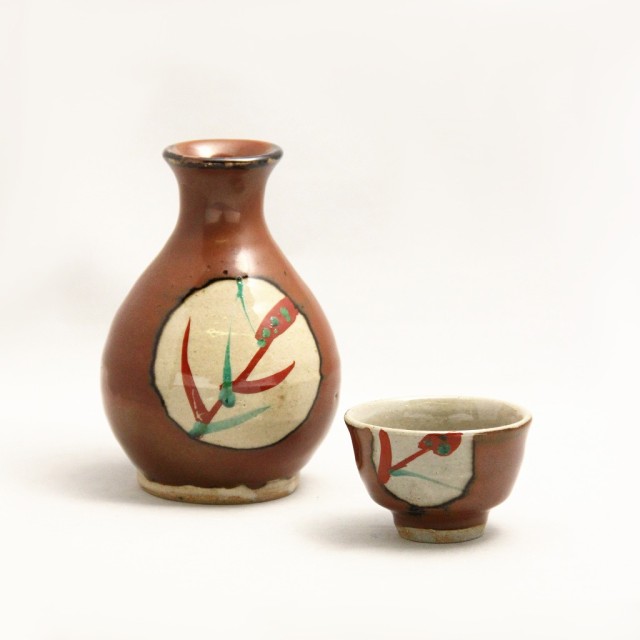
▲This sake set, consisting of a tokkuri (flask) and guinomi (cup), was created by Shoji Hamada (1894–1978), a Living National Treasure and key figure of the Mingei (folk craft) movement in Japan.

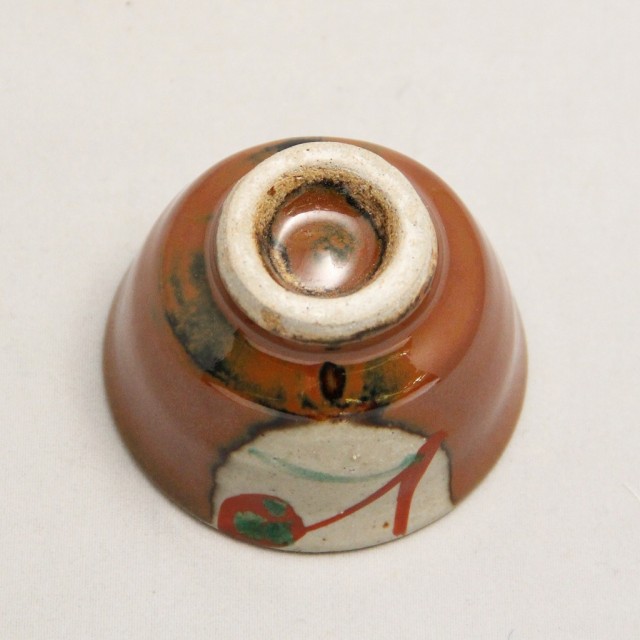
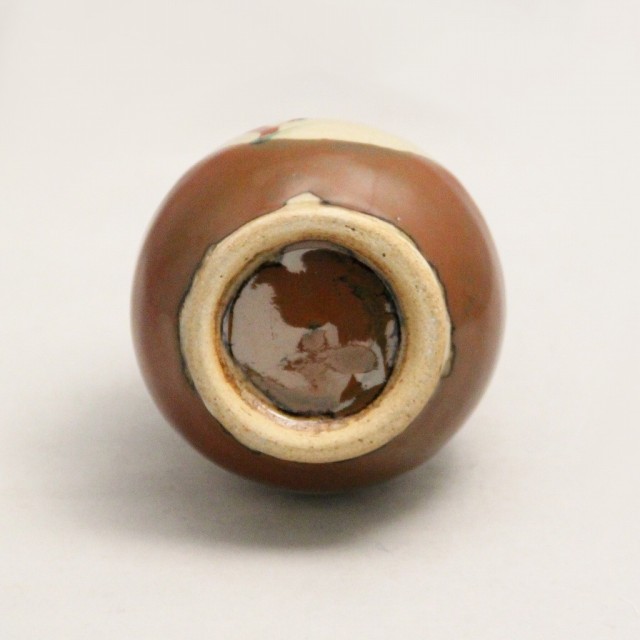
▲A guinomi (sake cup) by Shoji Hamada, featuring a rich reddish-brown glaze contrasted with a hand-drawn circular motif carved out of the clay body.
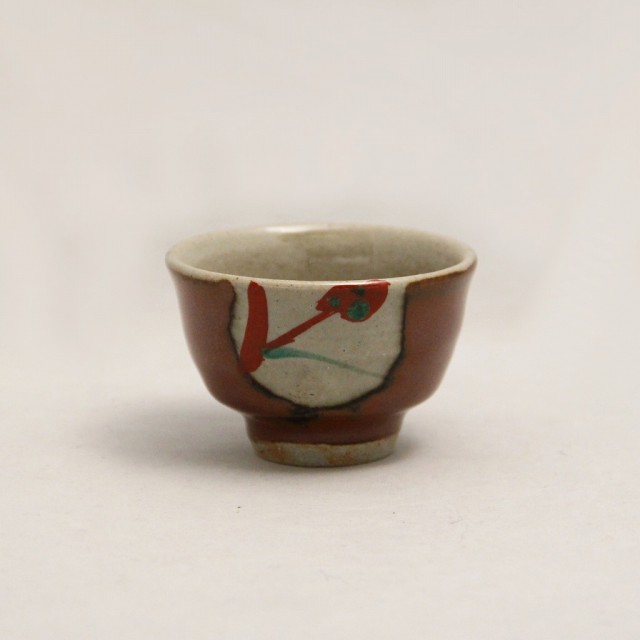
▲Within the roundel, a simplified floral design in red and green expresses Hamada’s rustic yet refined aesthetic. Its compact size fits naturally in the hand, enhancing both form and function.
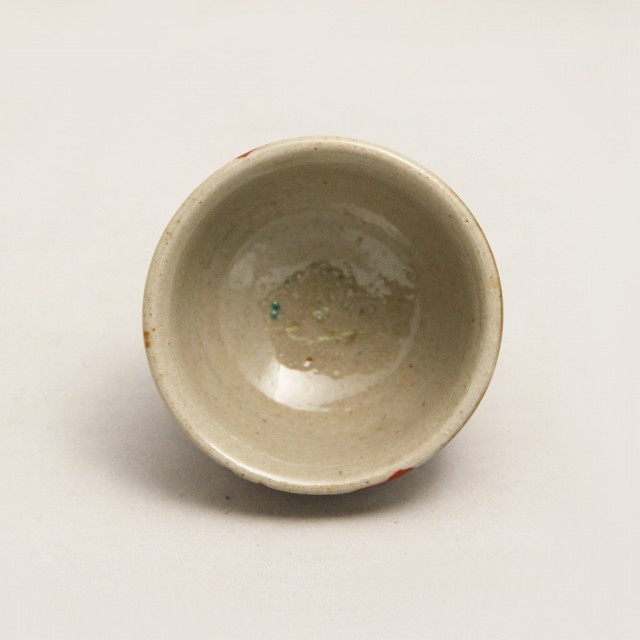
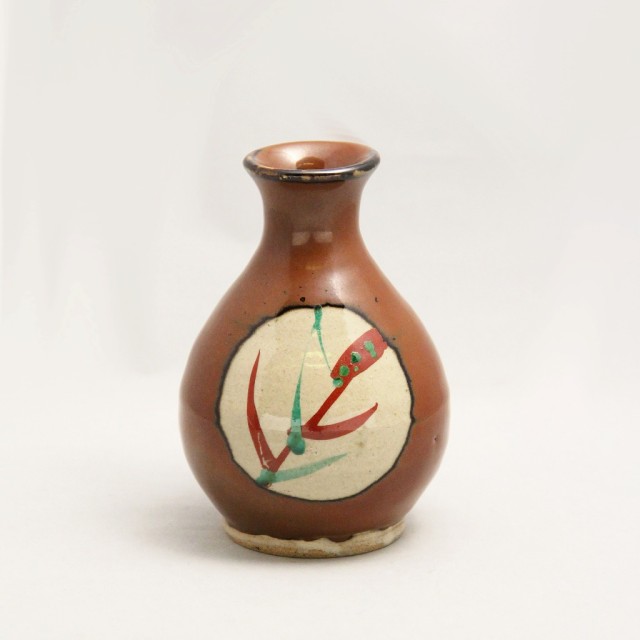
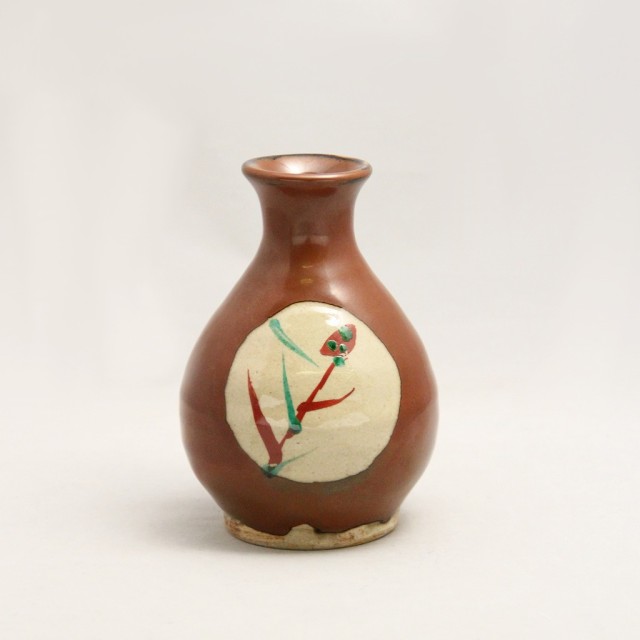
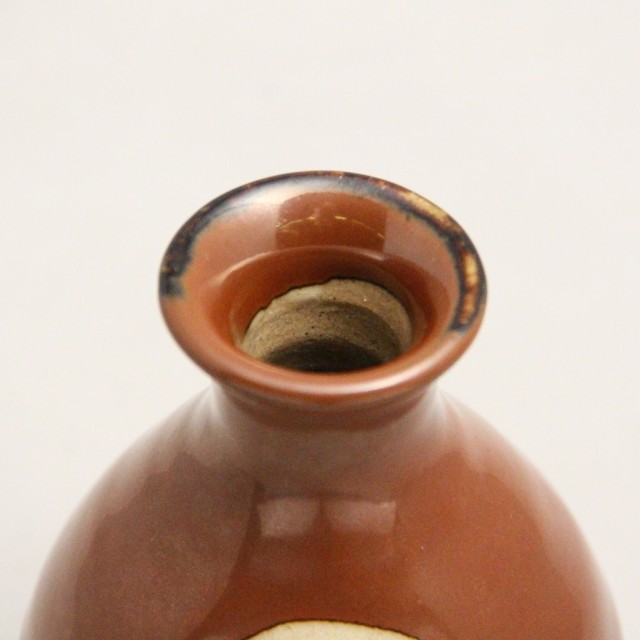
▲The piece features bold red enamel roundels hand-painted over a warm iron glaze background, expressing Hamada’s signature blend of rustic charm and refined artistry.

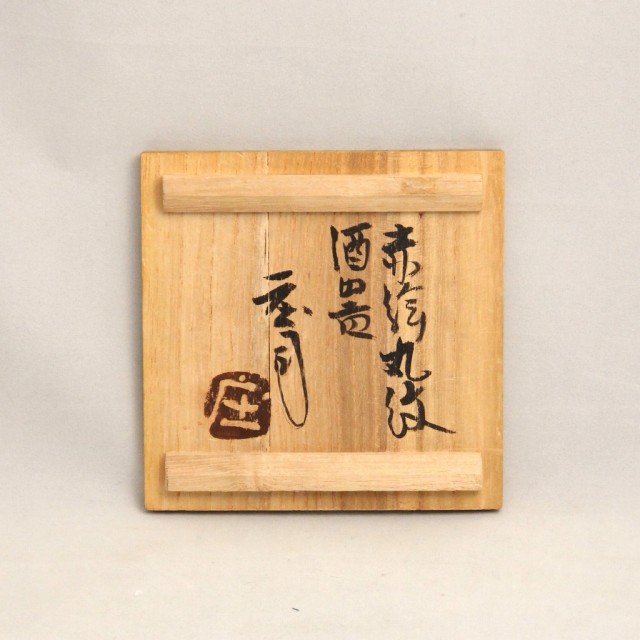
▲The box bears the title and signature written by Hamada Shoji himself.
with a signed box
Showa
Living National Treasure
Sake Cup:D7.2cm H5cm
Bottle:D9.4cm H13.5cm
This piece was made as a set of a tokkuri and a sake cup. It is iron-glazed with a sugar cane design in a circular pattern.
Shoji Hamada himself described his life as "having found his way in Kyoto, started in England, studied in Okinawa, and grew up in Mashiko. He settled in Mashiko and left behind many works with a healthy and solid style that emphasized practicality. He later became a Living National Treasure. He also started the Mingei (folk art) movement with Muneyoshi Yanagi and Kanjiro Kawai.
Shoji HAMADA(濱田庄司)
1894 - 1978
He was a potter within the folk tradition of Japanese. He was a long-time friend of Kanjiro Kawai, Soetsu Yanagi, and Bernard Leach with whom he co-founded the Japan Folk Art Association in 1926. Hamada became an important figure in the Japanese folk arts movement. After 1923, he moved to Mashiko where he rebuilt farmhouses and established his large workshop. Throughout his life, Hamada demonstrated an excellent glazing technique, using such trademark glazes as temmoku iron glaze, nuka rice-husk ash glaze, and kaki persimmon glaze. Through his frequent visits and demonstrations abroad, Hamada influenced many potters of the world in later generations as well as those of his own.
Contact about the Item