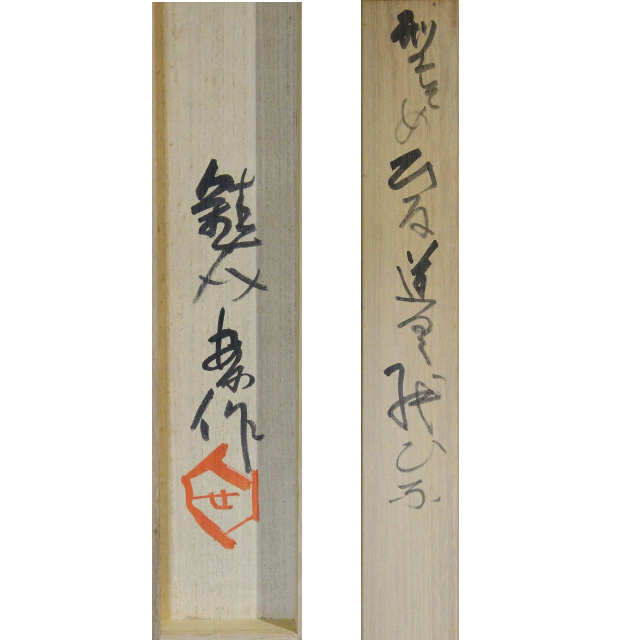
Original Box
D69cm H195cm
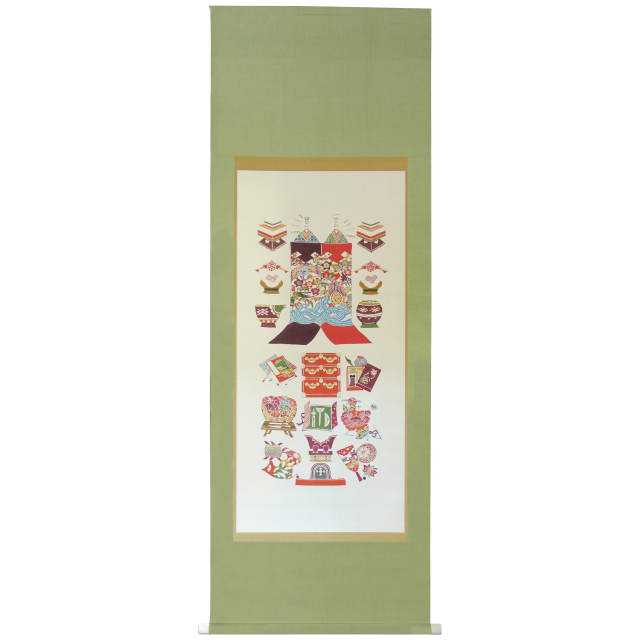
This hanging scroll is a katazome (stencil-dyeing) work by the Living National Treasure Keisuke Serizawa.
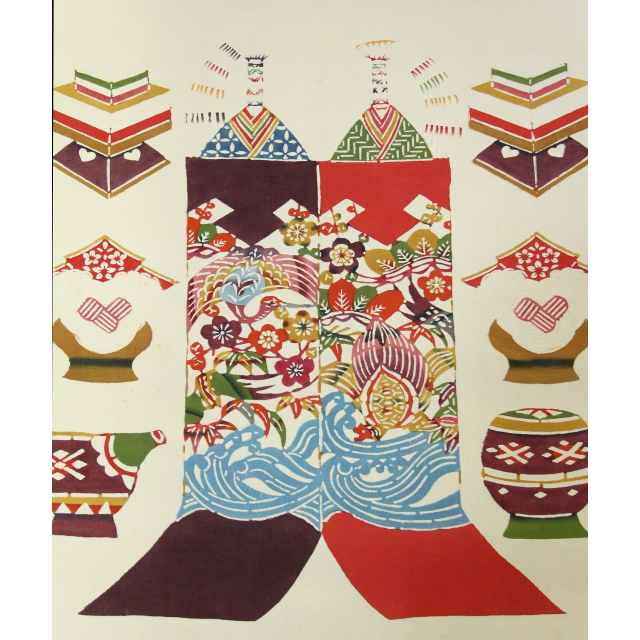
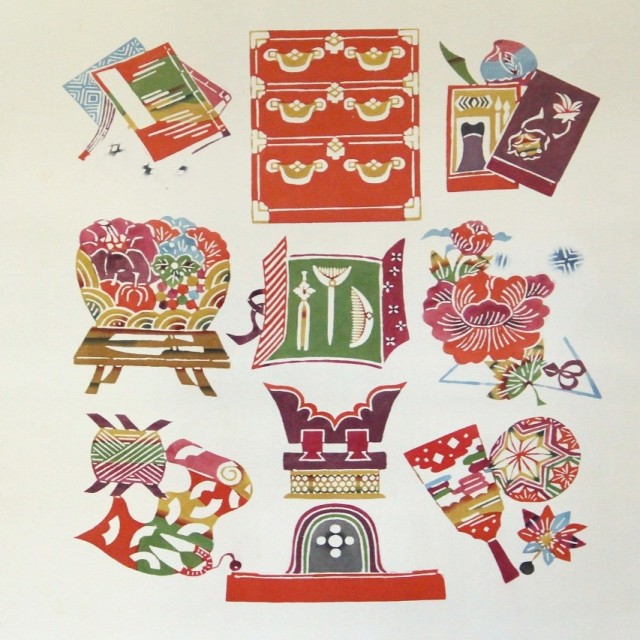
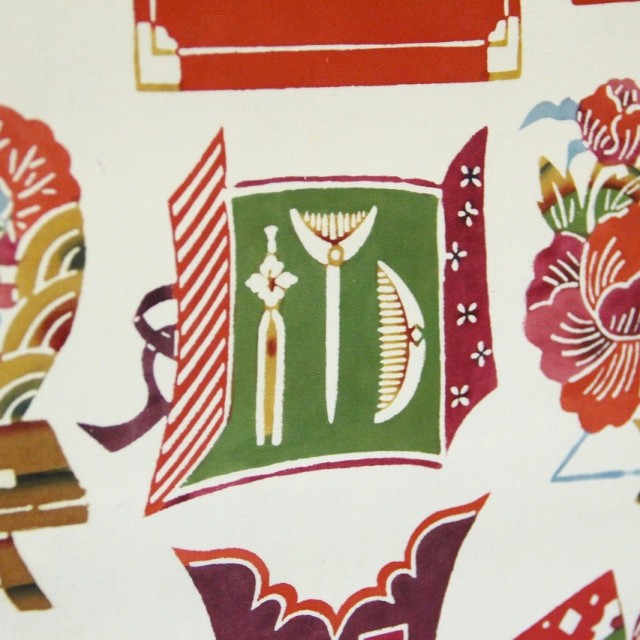
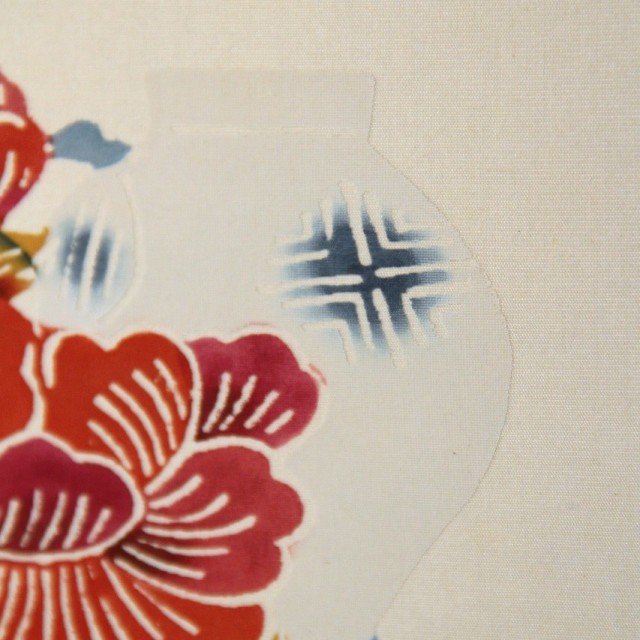
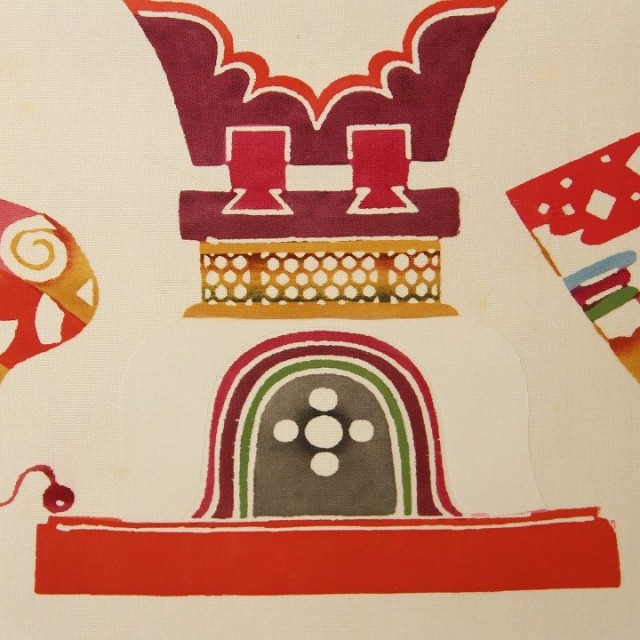
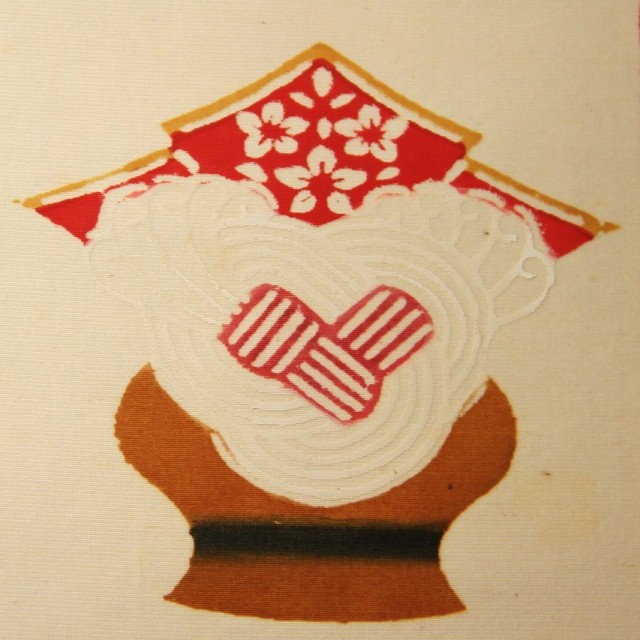
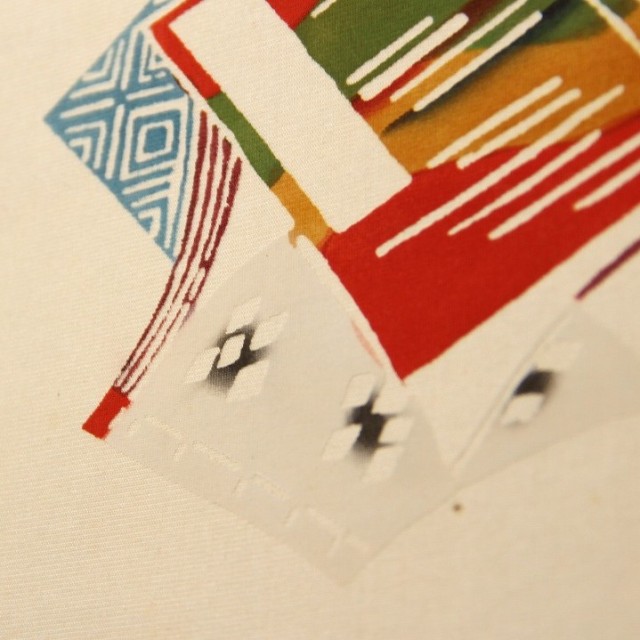
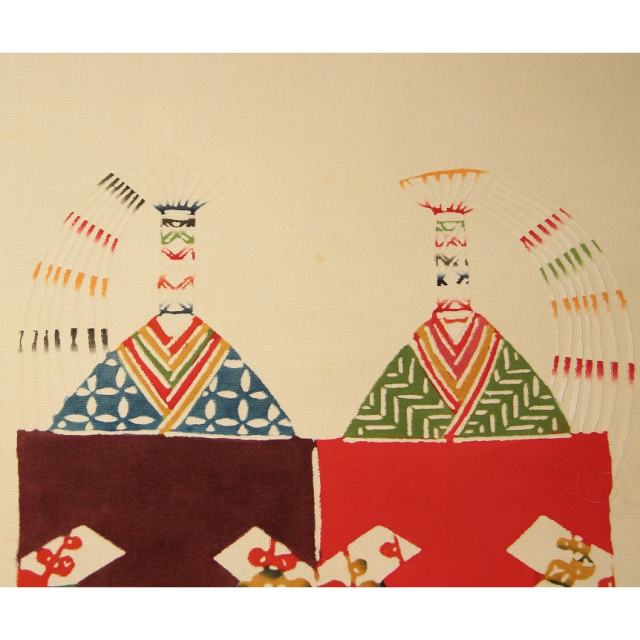
The composition is inspired by Ito-bina, traditional folk dolls from Kagoshima in Kyushu. Serizawa transforms their charming, handcrafted character into a refined visual language, using vivid colors and exquisitely detailed patterns. The result is a lively yet gentle atmosphere, filled with a festive sense of celebration.
At the center appear the imperial male and female hina dolls, surrounded above and below by beautifully arranged ceremonial furnishings—such as folding screens, shell boxes, palanquins, writing boxes, and other traditional implements. Bold stencil lines and harmonious color fields reflect Serizawa’s craftsmanship and his deep connection to the ideals of the Mingei (folk craft) movement.
This design carries a personal story as well: Serizawa created it for his first grandchild living in Sendai, mounting the work as a hanging scroll titled “Hina Implements” and presenting it as a heartfelt gift. The tenderness of that gesture resonates warmly through the entire piece.
The mounting features a soft green fabric that complements the vivid palette of the artwork, giving the scroll an elegant and tranquil presence. Suitable as seasonal decoration or year-round display, it is a beautiful example of Serizawa’s artistry and the enduring charm of Japanese folk culture.
Keisuke SERIZAWA
1895 – 1984
He was a Japanese textile designer. In 1956, he was designated as a Living National Treasure by the Japanese government for his katazome stencil dyeing technique. A leading member of the mingei movement founded by Yanagi Sōetsu, Serizawa visited Okinawa several times and learned the Ryūkyū bingata techniques of dyeing. His folk-art productions included kimono, paper prints, wall scrolls, folding screens, curtains, fans, and calendars. In 1981, the Municipal Serizawa Keisuke Art Museum was opened in the city of Shizuoka. Other museums that hold his work include the Brooklyn Museum, the Metropolitan Museum of Art, the Harvard Art Museums, the Seattle Art Museum, the British Museum, the University of Michigan Museum of Art, and the Museum of New Zealand.
Contact about the Item