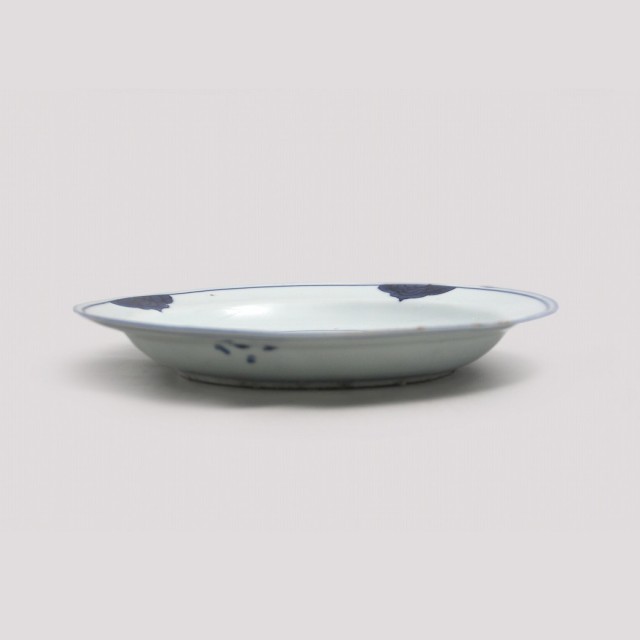
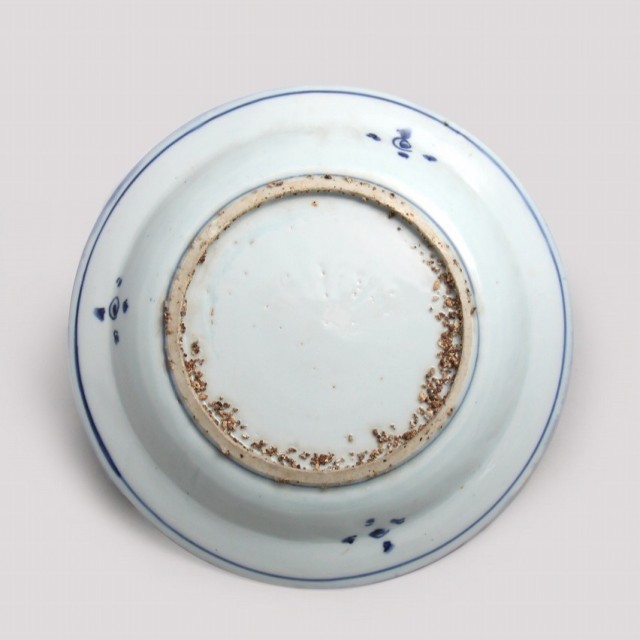
D21.5cm H3cm
China, Ming Dynasty (17th century)
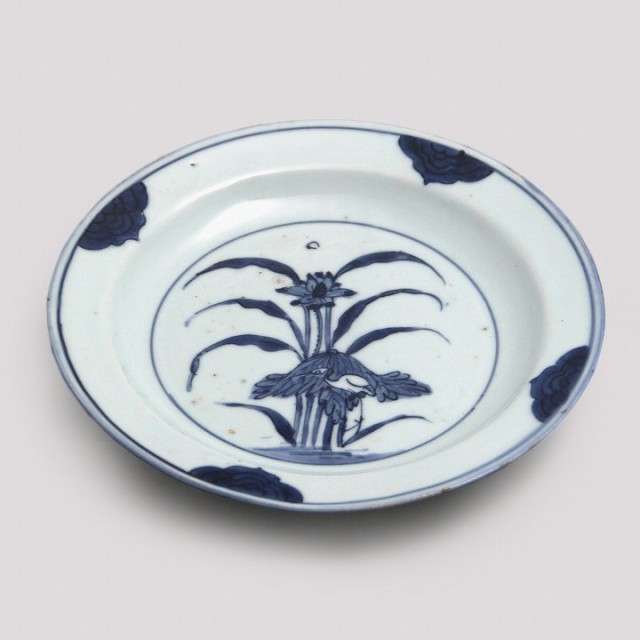
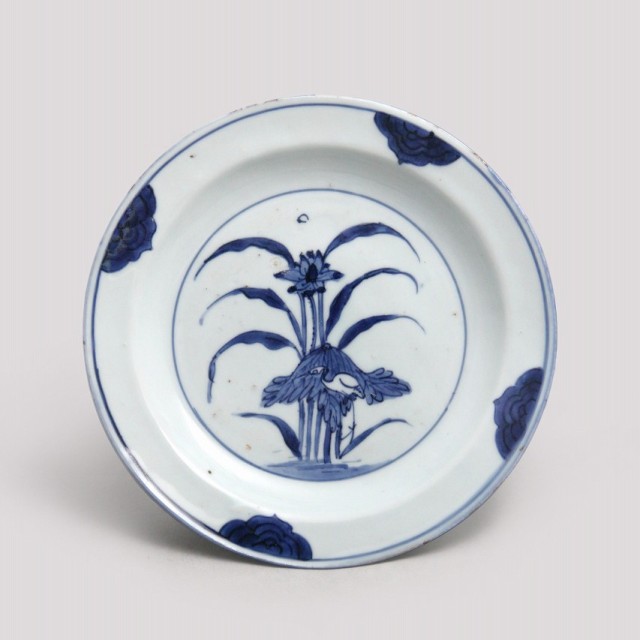
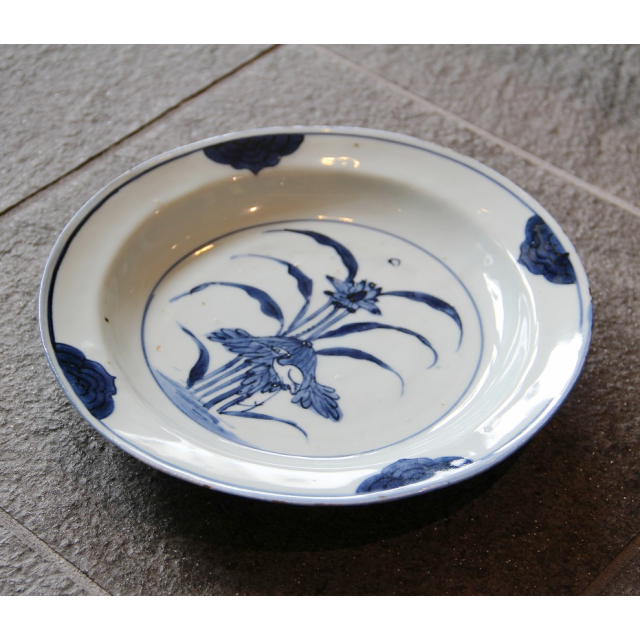
This plate is a prime example of Kosometsuke (Old Blue and White), produced during the late Ming Dynasty (Tianqi era) at the Jingdezhen kilns specifically for the Japanese market.
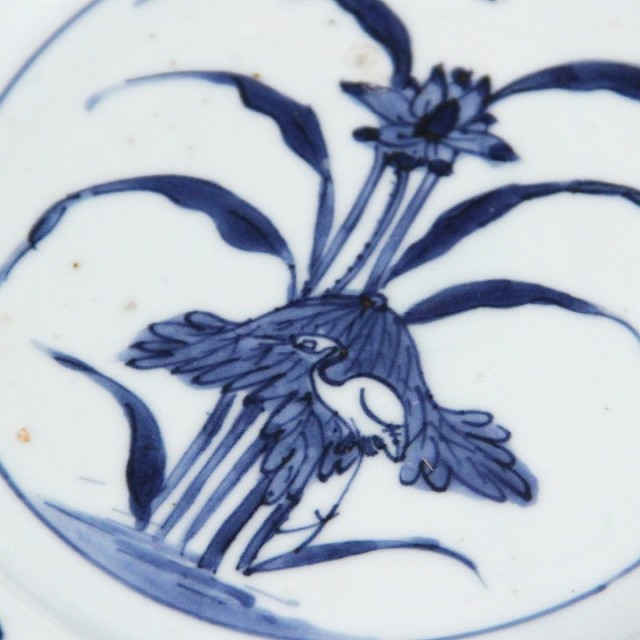
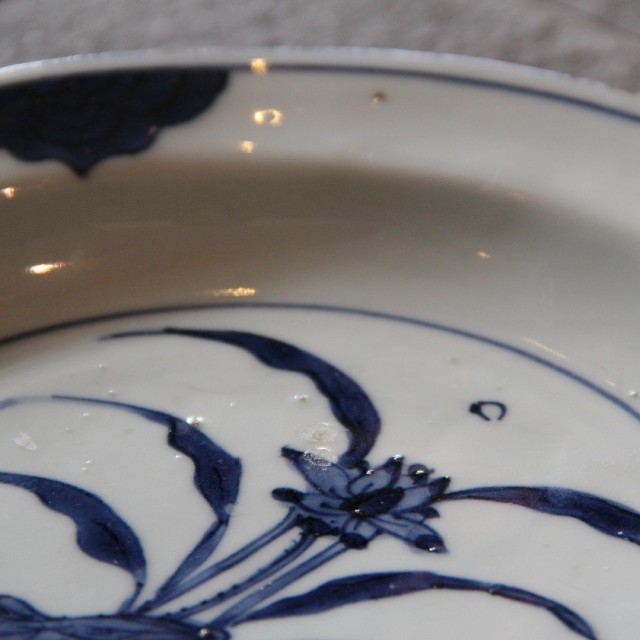
The central motif features a white heron nestled amidst lush lotus leaves. The freehand, spontaneous brushwork—a hallmark of Kosometsuke—gives the scene a lively yet serene atmosphere, capturing the essence of a quiet lotus pond with whimsical charm.
One of the most prized features of this piece is the "mushikui" (moth-eaten) effect along the rim—intentional glaze flaking that Japanese tea masters historically admired as a sign of natural beauty and "wabi-sabi." The deep cobalt blue tones contrast beautifully with the soft, grayish-white porcelain body.
Reference: A similar example is documented in the authoritative volume "Kosometsuke: Reference Edition" published by Kyoto Shoin, underscoring this piece's artistic and historical significance.
Contact about the Item