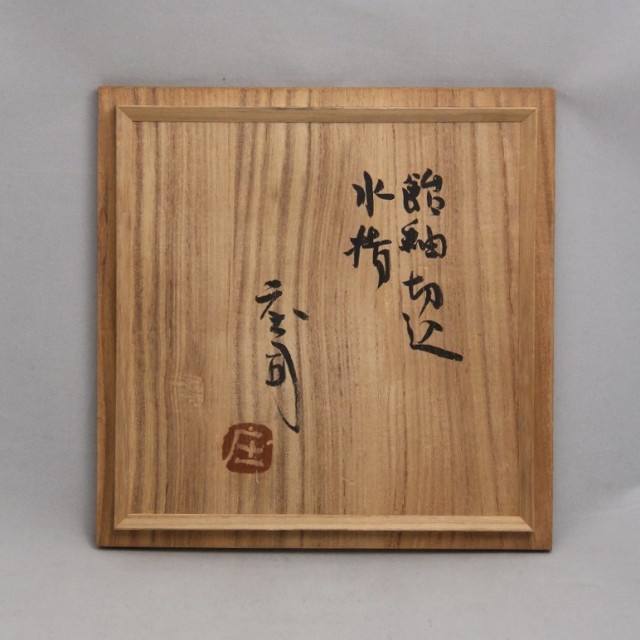
Original wooden box signed by the artist (Tomobako)
Showa era
Living National Treasure
D18cm H15.5cm
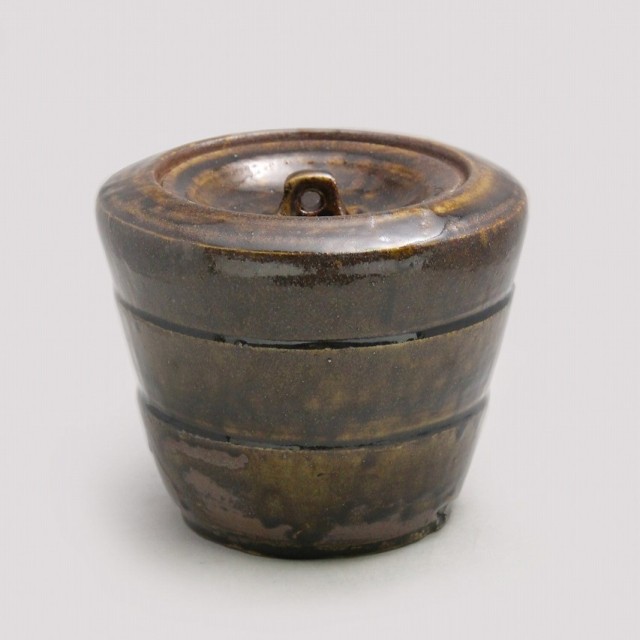
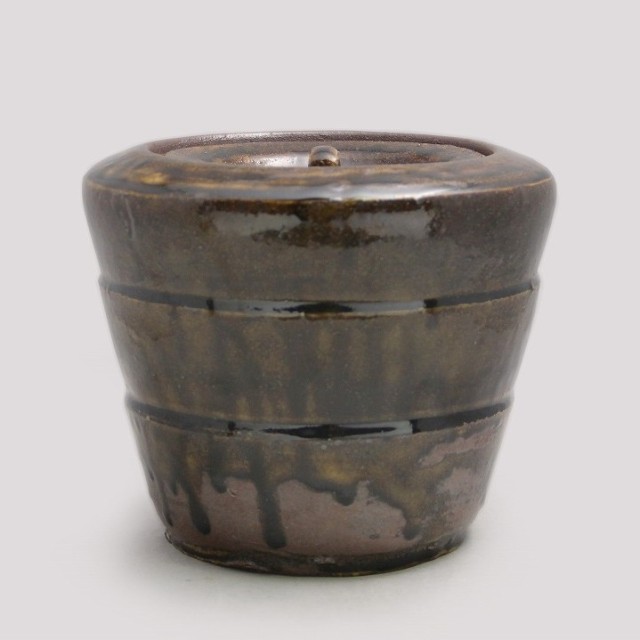
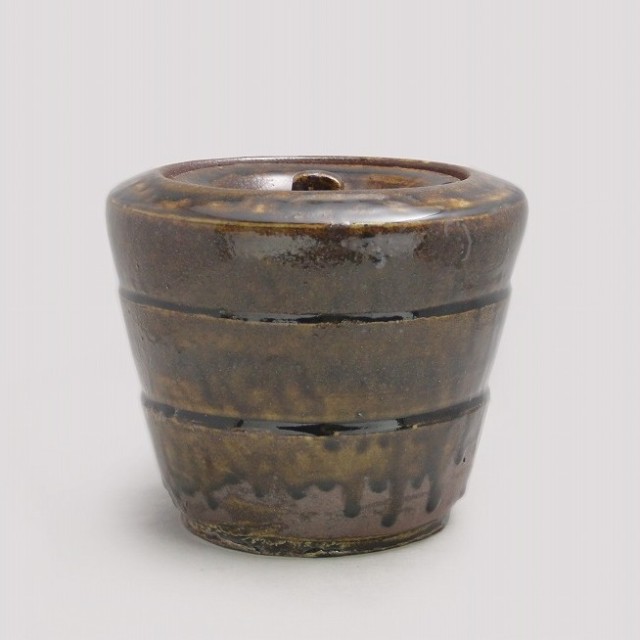
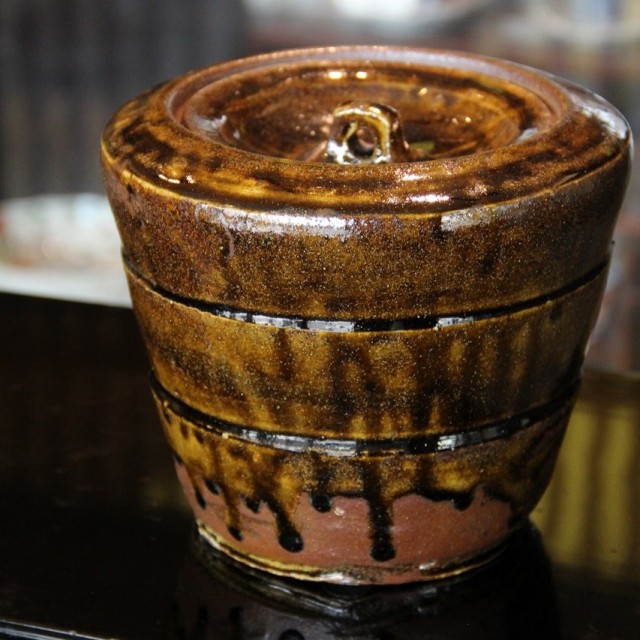
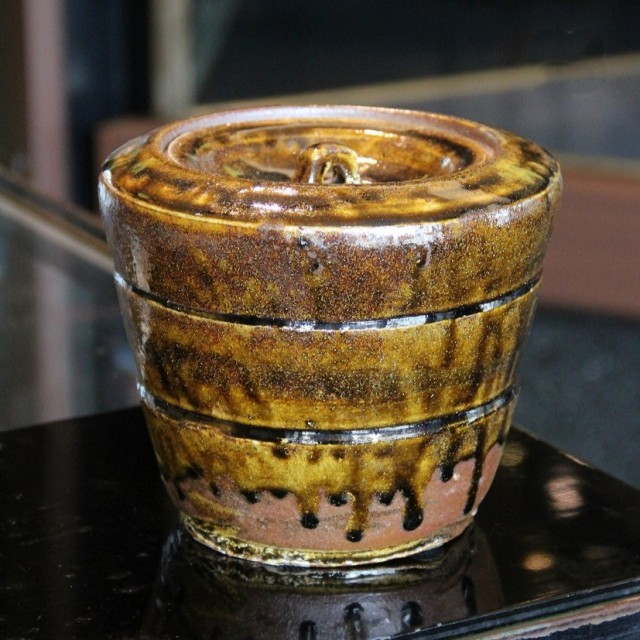
This is a magnificent amber-glazed incised water jar (Ame-yu Kirikomi Mizusashi) boasting both robust weight and functional beauty, crafted by Shoji Hamada (1894–1978). Hamada was a towering master who deeply rooted the spirit of the Mingei (Folk Art) movement in modern Japanese ceramics and was designated among the very first Living National Treasures (Holder of Important Intangible Cultural Property) of Japan in 1955.
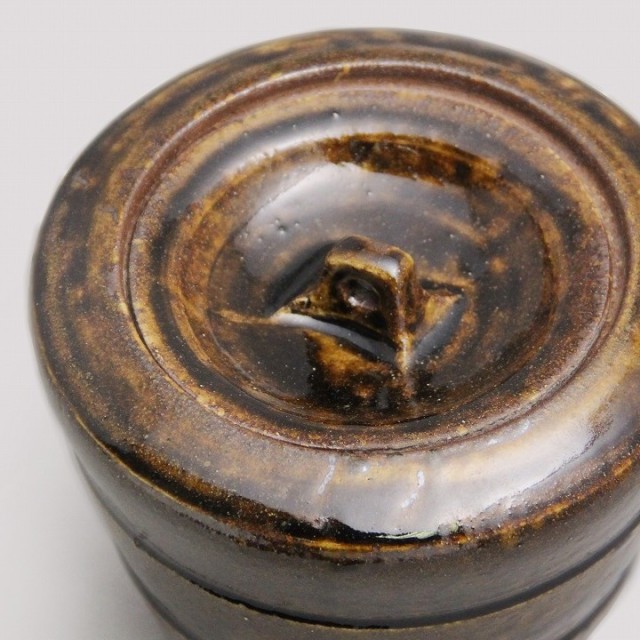
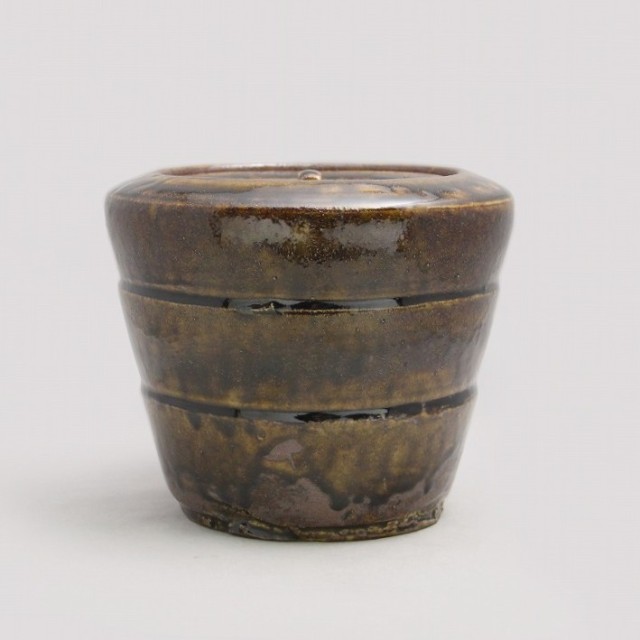
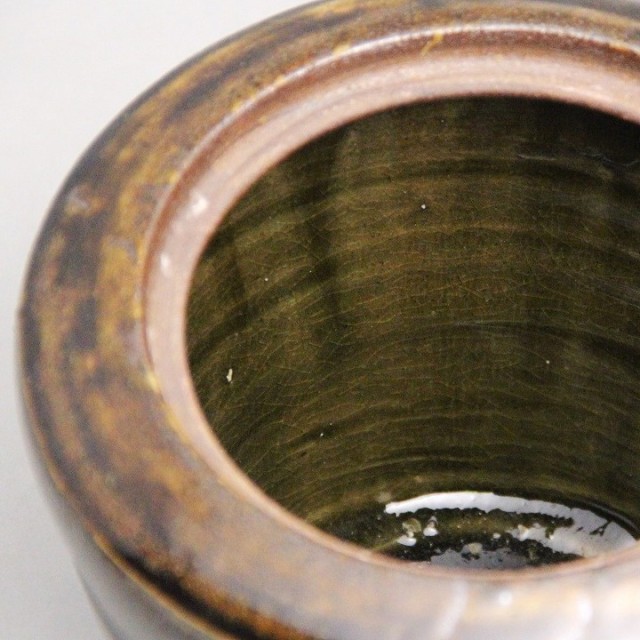
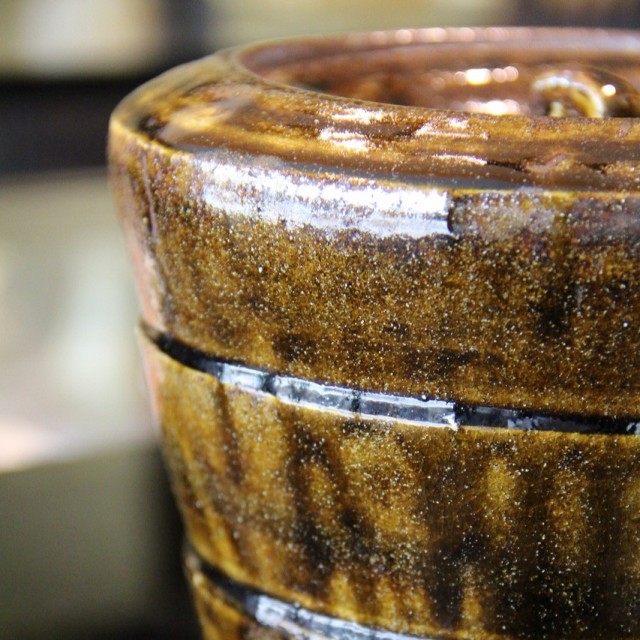
The primary allure of this piece lies in the profound and rich expression of its Ame-yu (amber glaze). Transitioning from a deep, near-black dark brown to a lustrous, translucent amber reminiscent of natural honey, the glaze embodies the exceptionally organic and powerful beauty woven by the iron-rich glaze and the flames of the climbing kiln.
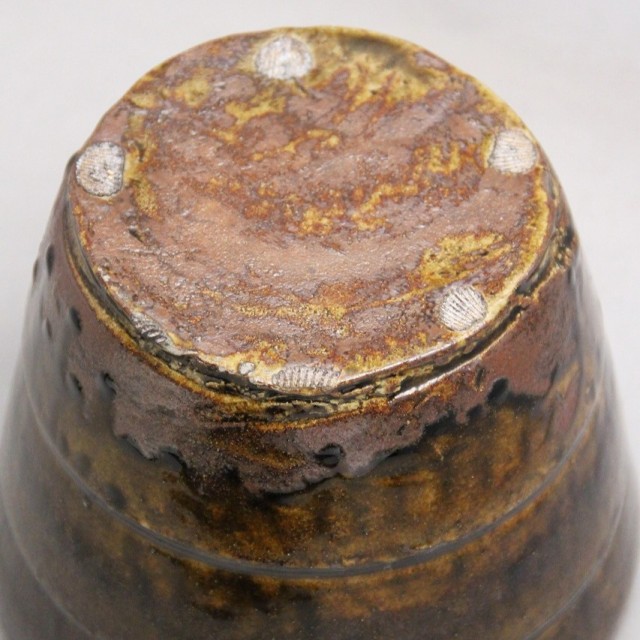
The generous, sturdily potted body appears firmly grounded to the earth and features bold, horizontal incisions (Kirikomi). This minimal yet masterful design prevents monotony, imparting a pleasing tension and a modern rhythm to the overall form.
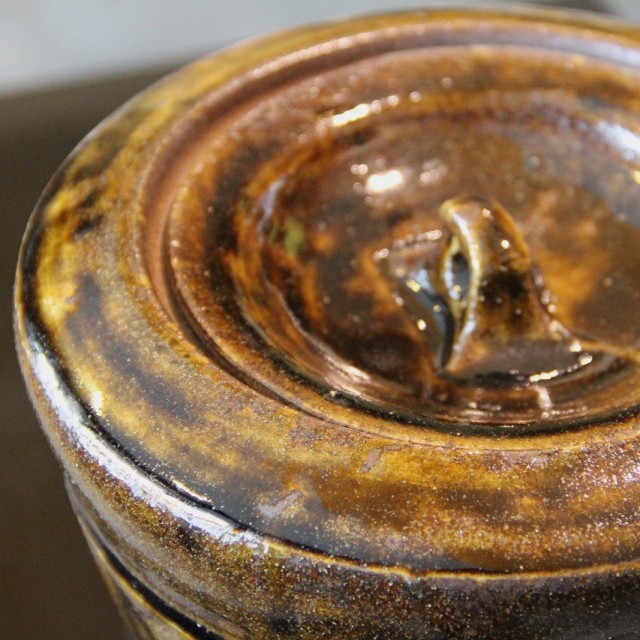
From the honest, unpretentious execution of the matching lid's handle to the entire silhouette, the vessel breathes a healthy beauty stripped of all affectation and redundant ornamentation, radiating a commanding presence fit for center stage in a tea ceremony.
Furthermore, while perfectly suited as a prestigious water jar for the tea ceremony, this versatile masterpiece also beautifully integrates into contemporary everyday life through the owner's creative repurposing—whether utilized as a dynamic flower vase by removing the lid or displayed as a striking sculptural objet d'art to adorn a modern interior.
Perfectly fusing the beauty of handcraft and functional utility that Shoji Hamada passionately pursued throughout his lifetime, this exquisite masterpiece offers exceptional collectible value for discerning connoisseurs.
Shoji HAMADA(濱田庄司)
1894 - 1978
He was a potter within the folk tradition of Japanese. He was a long-time friend of Kanjiro Kawai, Soetsu Yanagi, and Bernard Leach with whom he co-founded the Japan Folk Art Association in 1926. Hamada became an important figure in the Japanese folk arts movement. After 1923, he moved to Mashiko where he rebuilt farmhouses and established his large workshop. Throughout his life, Hamada demonstrated an excellent glazing technique, using such trademark glazes as temmoku iron glaze, nuka rice-husk ash glaze, and kaki persimmon glaze. Through his frequent visits and demonstrations abroad, Hamada influenced many potters of the world in later generations as well as those of his own.
Contact about the Item