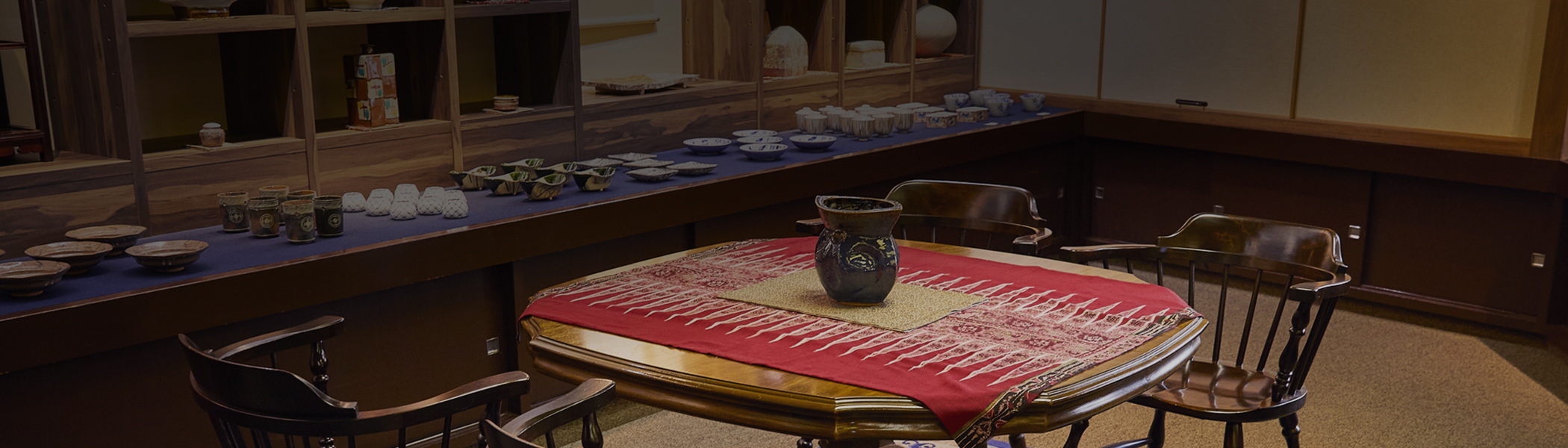
Satsuma ware is a general term for ceramics produced in Kagoshima Prefecture. However, in a narrower sense, the term often refers specifically to Satsuma Nishikide, a richly decorated style of Satsuma ware.
Satsuma ware is categorized by kiln origin, with various kilns such as Kochōsa, Kushikino, Naeshirogawa, and Hirasa being founded and later discontinued over time.
The origin of Satsuma ware dates back to the Bunroku and Keichō invasions (1592–1598), when Shimazu Yoshihiro, a feudal lord of Satsuma, brought Korean potters skilled in ceramics back to Japan in 1595 (Bunroku 4) and had them establish kilns.
In 1614 (Keichō 19), Boku Heii discovered white clay, marking the beginning of White Satsuma (Shiro Satsuma).
Later, in 1648 (Keian 1), Arimura Wanemon introduced purely Japanese-style overglaze painting techniques from the Omuro Kiln in Kyoto, leading to the development of Satsuma Nishikide, a richly decorated type of Satsuma ware.
Satsuma ware is generally divided into White Satsuma and Black Satsuma. White Satsuma was used as official ware for the Shimazu clan, and the production and sale of such pieces outside the domain kilns were strictly prohibited. These pieces are known as Kenjō Satsuma (tribute Satsuma).
Since 1958, Satsuma ware has been officially recognized as having a history of over 400 years. By the late Edo period, new decorative techniques such as Kinrande (gold-enriched overglaze painting) were developed and added to traditional White Satsuma. These luxurious gold-relief decorations were so elaborate that iroeshi (colored-paint artisans) would often spend several months to complete a single piece.