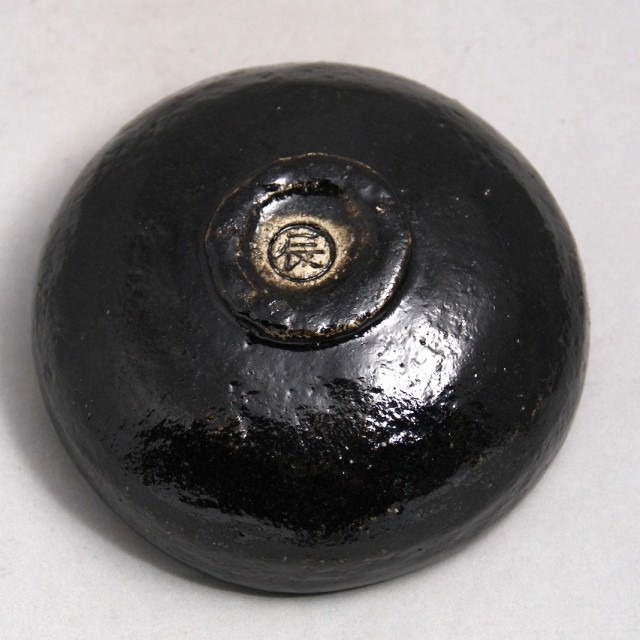
▲The base (kodai) bears an impressed signature "Tatsu" (辰) seal.
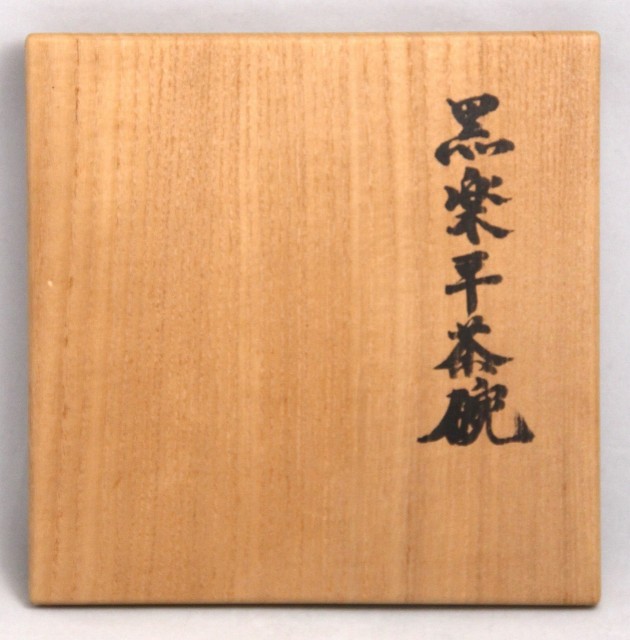
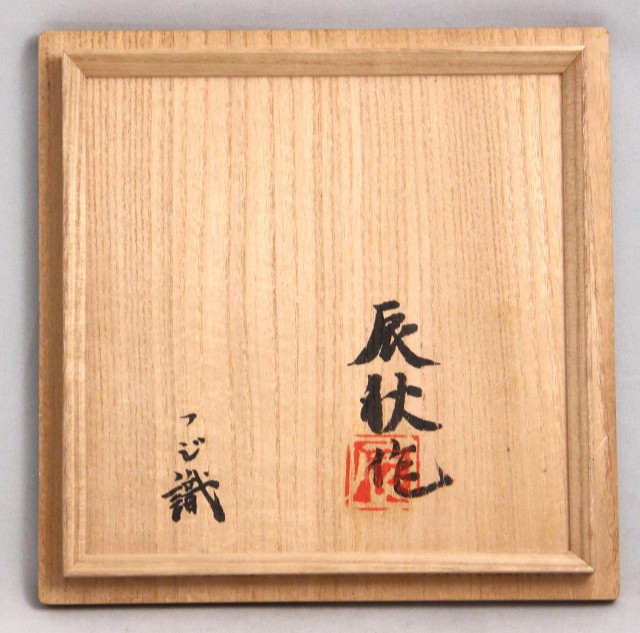
▲This work is accompanied by a shikibako (authenticated box) inscribed by the artist’s wife, Fuji Kuroda.
Box inscribed by Fuji Kuroda(Tatsuaki KURODA's wife)
Living National Treasure
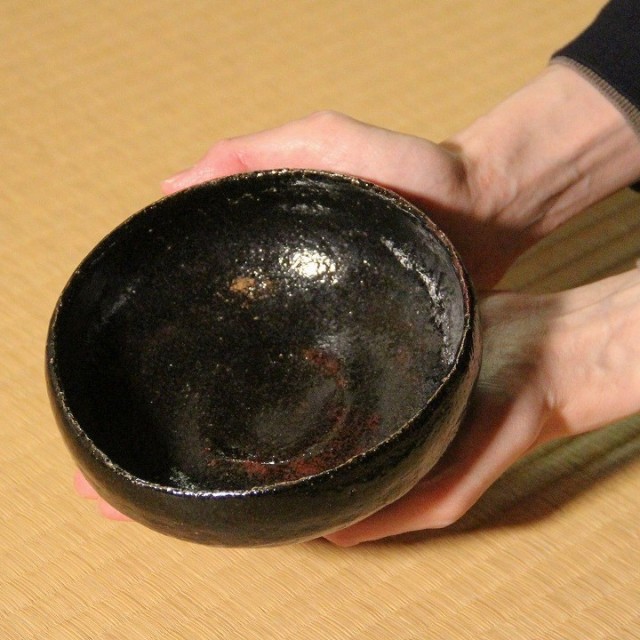
D14.5cm H5.3cm
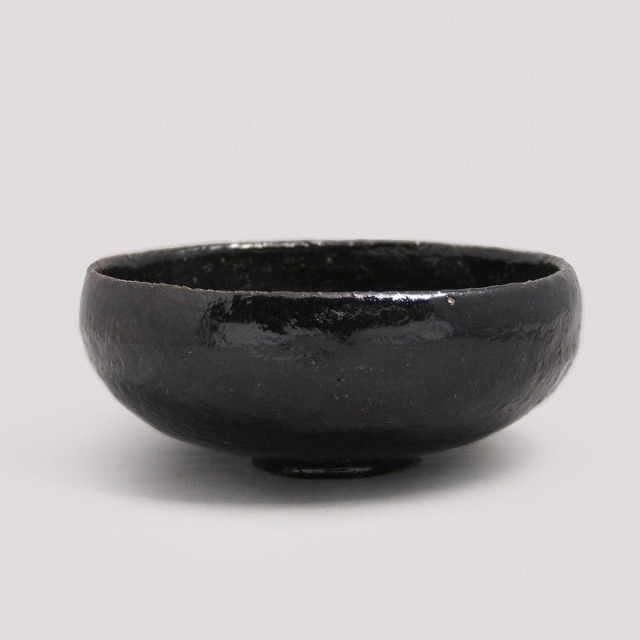
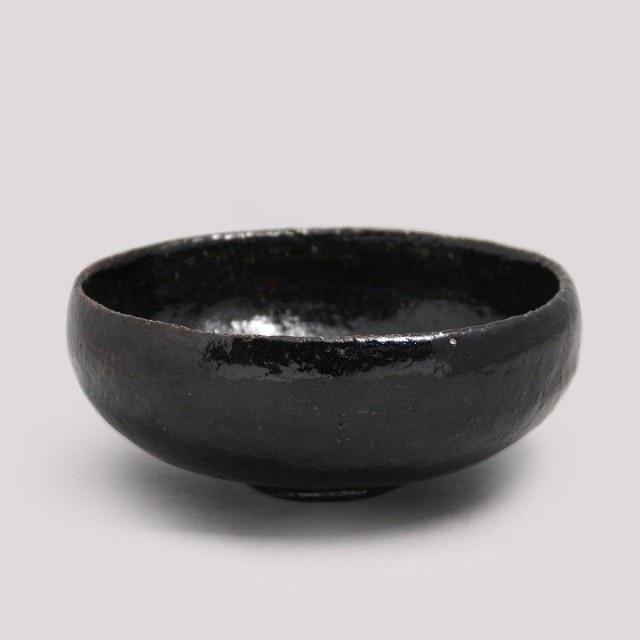
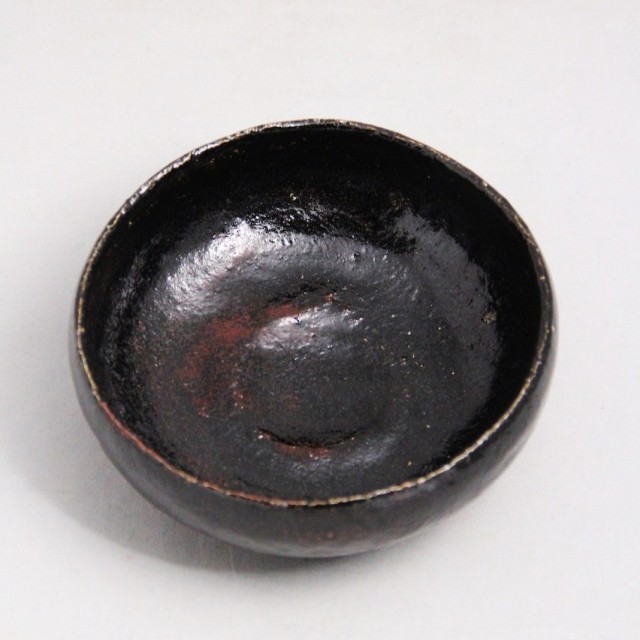
This is a Black Raku Hirachawan (shallow tea bowl) by the master artist Tatsuaki Kuroda, a Living National Treasure (Holder of Important Intangible Cultural Property) in woodworking who profoundly embodied the spirit of the Mingei (Japanese Folk Crafts) movement.
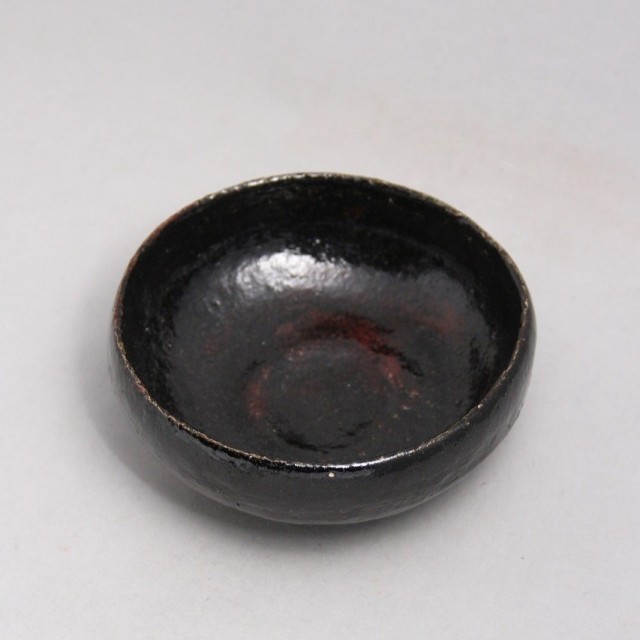
The piece features a powerful sense of form and a "depth of color" that resonates with the exquisite lacquerwork for which he is primarily known. Inside the bowl (mikomi), subtle reddish hues are exquisitely intermingled within the profound black glaze.
On the rim, there is a small "hajike" (a crater-like mark caused by the bubbling of the glaze during firing). This is a natural "keshiki" (aesthetic feature or "scenery") born from the intense heat of the kiln and is a testament to the organic nature of Raku ware. It does not, of course, affect the bowl's functionality or durability.
The foot (kodai) is stamped with the artist’s seal, "Tatsu" (辰). Furthermore, this work comes with a shikibako (authenticated storage box) signed by his wife, Fuji Kuroda.
Tatsuaki KURODA
1904 - 1982
Born into a family of lacquer artisans in Kyoto. Questioning the division of labor in the process of lacquer application, he desired to create works that incorporated not only the final lacquer layers but also the creation of the base materials, leading him to pursue both woodworking and lacquer art. In 1924, at the age of 20, he was deeply inspired by a lecture from Kanjiro Kawai and joined the Mingei (folk art) movement led by Kawai and Soetsu Yanagi. Supported by clients in Kyoto, including the famous confectionery shop, Kagiya Yoshihou, he pursued his own unique artistic expression. Kuroda also had deep ties with influential figures such as Masako Shirasu, Naoya Shiga, and Yasunari Kawabata, and even received a request from renowned film director Akira Kurosawa to make chairs for his villa. In 1966, at the request of the Imperial Household Agency, Kuroda created door decorations, large display shelves, and chairs for the New Imperial Palace. Alongside these large-scale works, he continued to create small items like tea utensils and decorative boxes. In 1970, he was designated as a Living National Treasure (Holder of Important Intangible Cultural Heritage) for his mastery in woodworking. The following year, he was awarded the prestigious Purple Ribbon Medal in recognition of his achievements in traditional crafts.
Contact about the Item