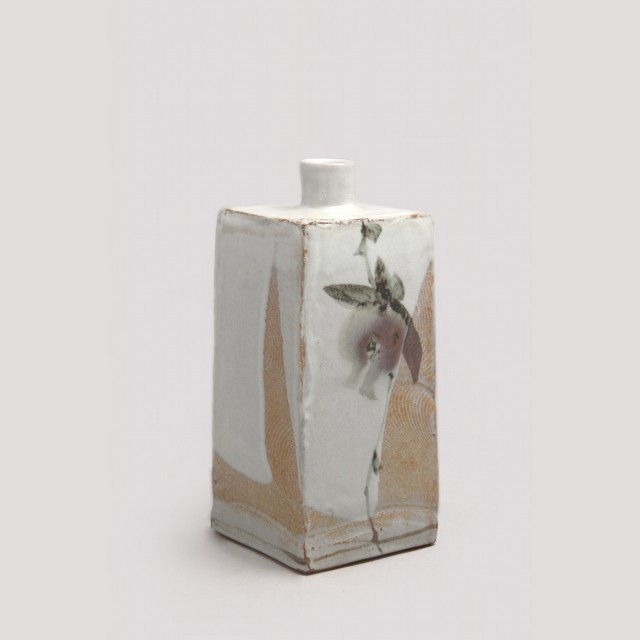
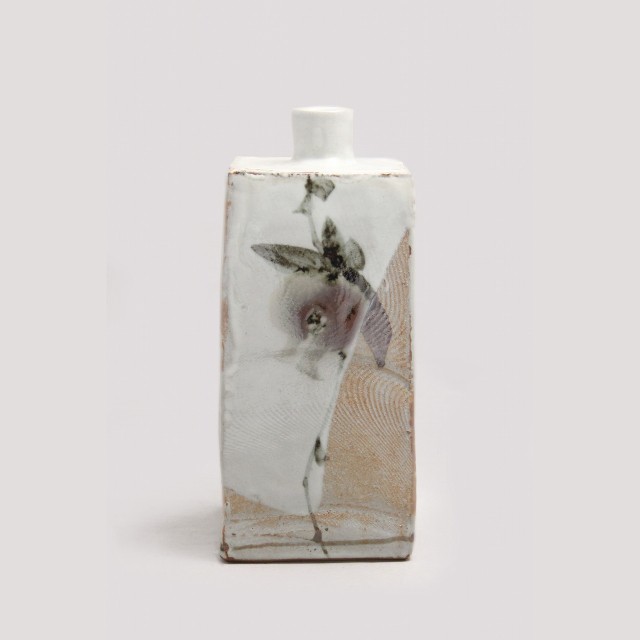
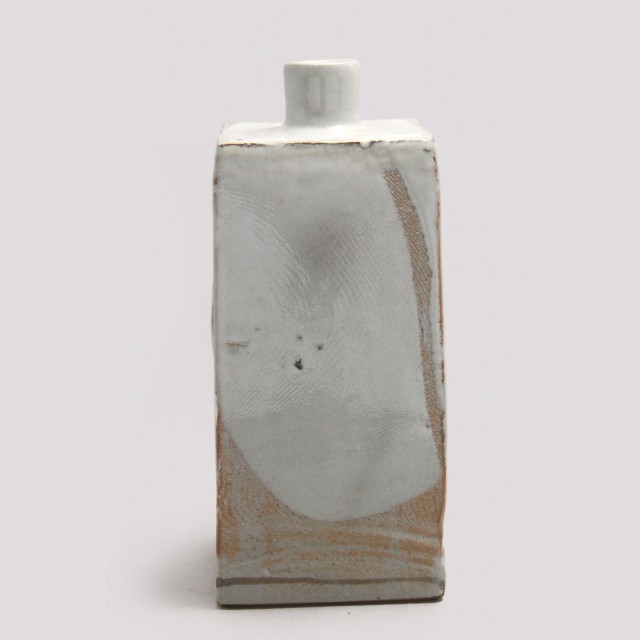
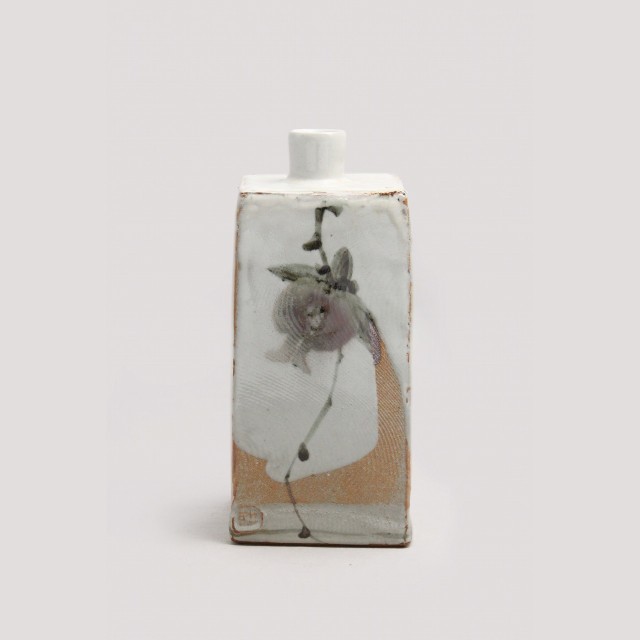
▲This is the other side.
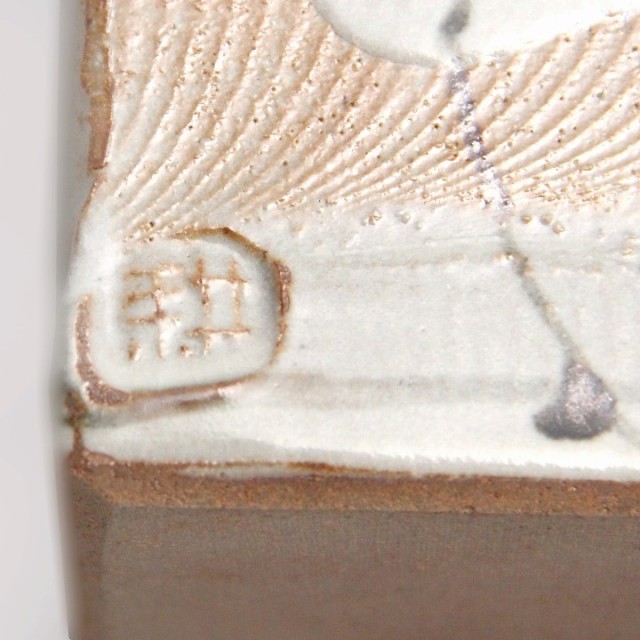
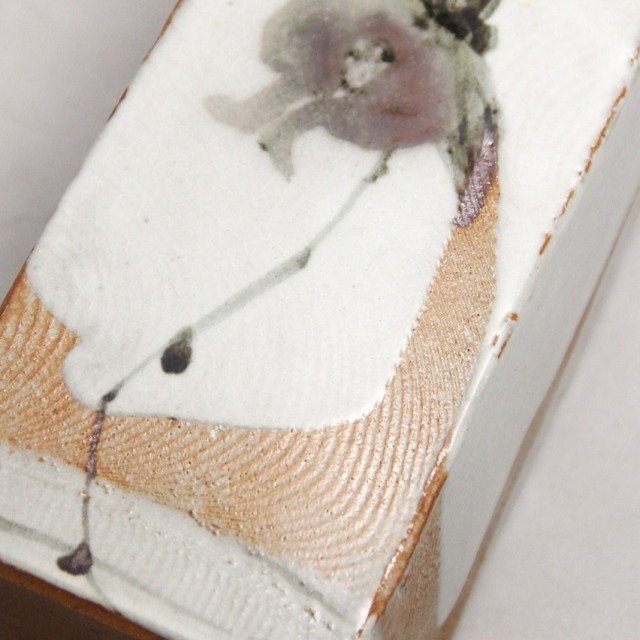
▲There is a “Ko” in the lower left corner of the square vase.
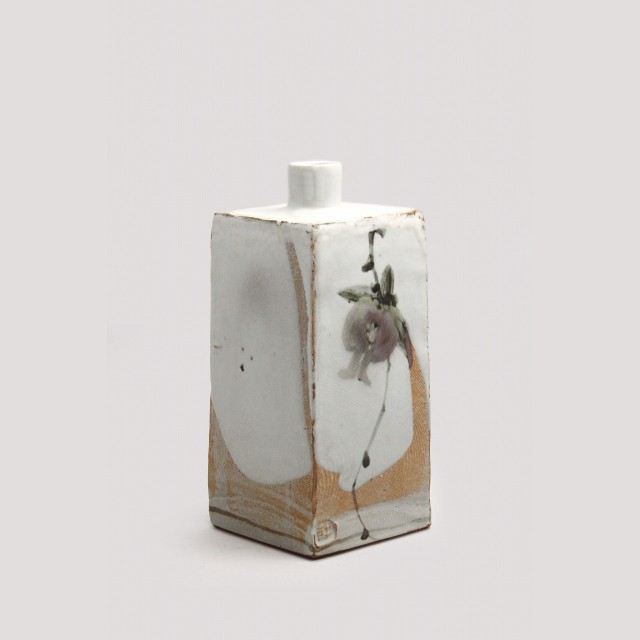
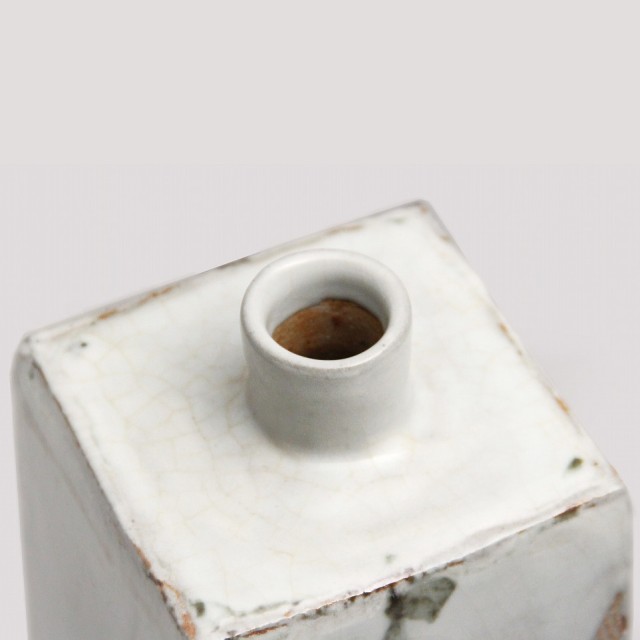
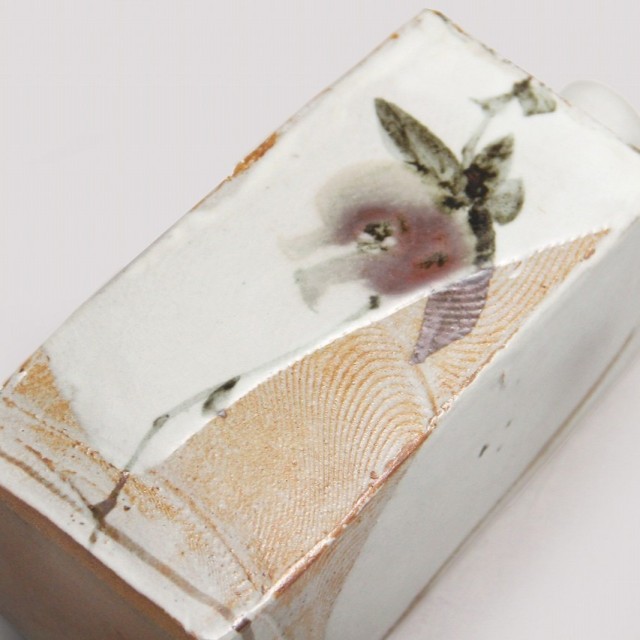
▲Crackle marks are visible around the rim at the top.
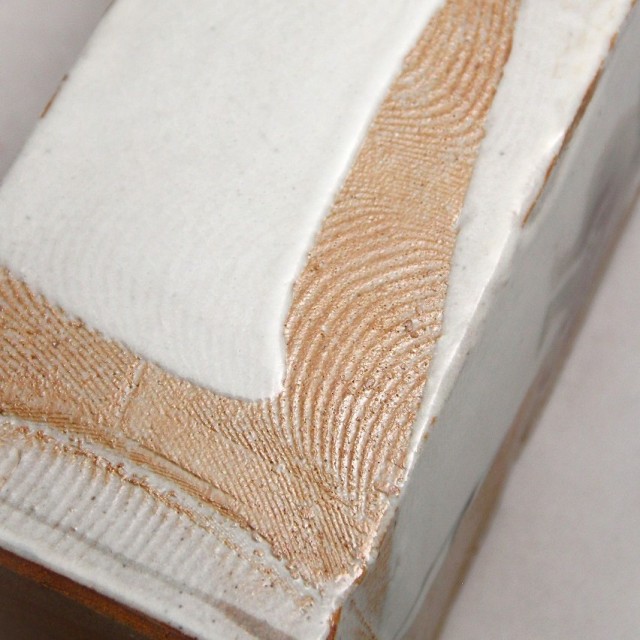
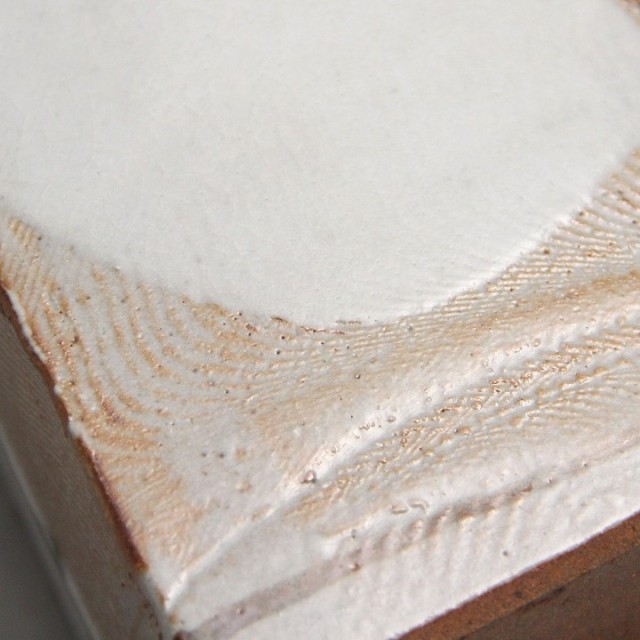
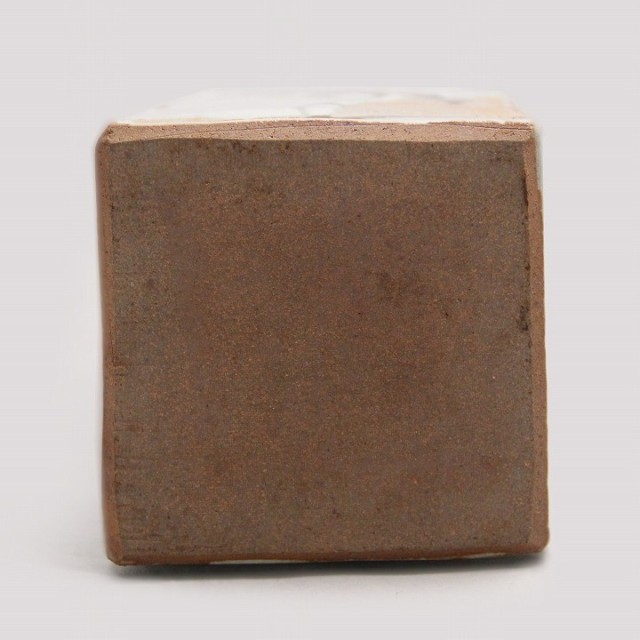
▲This is a foot.
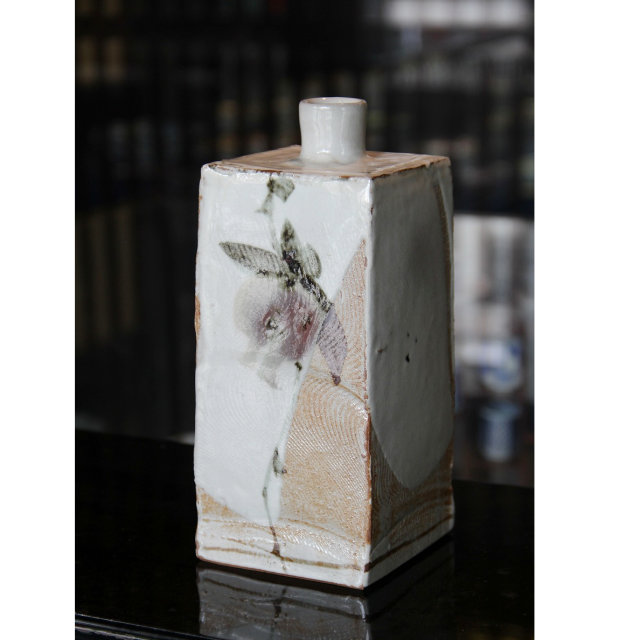
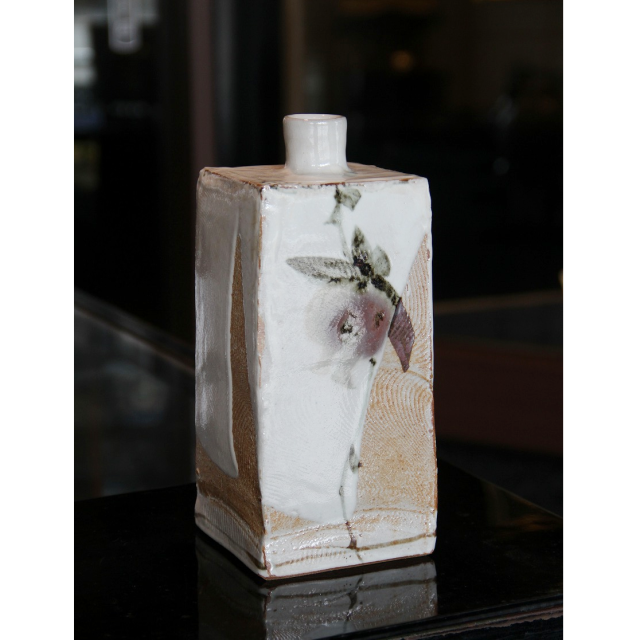
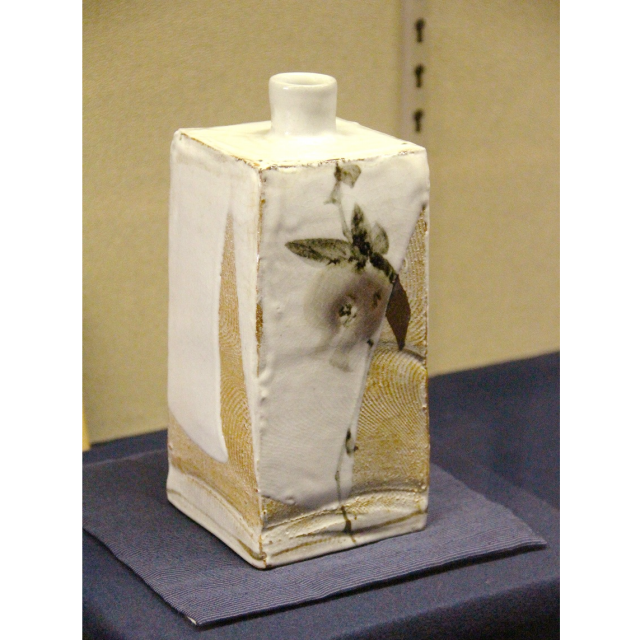
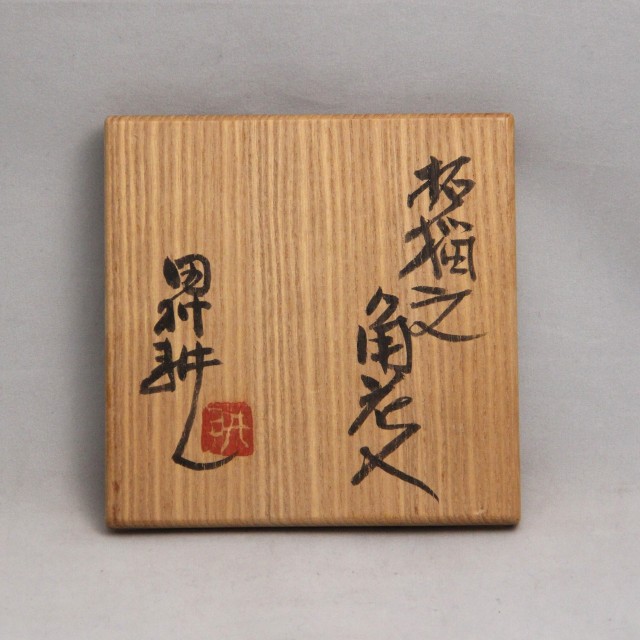
▲The lid of the box bears the inscription “Pomegranate-Patterned Square Vase” and “Koichi Tamura” in the handwriting of Koichi Tamura.
with signed box
Showa
Living National Treasure
This is an exquisite square ceramic flower vase ("Kaku-Hanairi") crafted by Koichi Tamura (1918–1987), a preeminent master of modern Japanese ceramics and designated a Living National Treasure for his exceptional skill in "Iron-glaze Painting" (Tetsue).
The vase features a solid, dignified rectangular form coated in Tamura's signature warm white glaze, which beautifully contrasts with the exposed earthy body near the base. Adorning the facets is a masterfully painted pomegranate ("Zakuro"), rendered with expressive and poetic brushstrokes that evoke the rich abundance of autumn.
Each angle offers a distinct visual narrative, seamlessly blending traditional Japanese rustic beauty with a sharp, modern geometric sensibility. Whether displayed as a standalone masterpiece or used to hold seasonal flowers, this piece lends an air of sophisticated elegance and timeless artistry to any interior.
Koichi TAMURA
1918 - 1987
Koichi TAMURA, throughout his long career, demonstrated a mastery of wheel throwing, glazing and firing techniques. Since childhood, he showed a talent for drawing and assisted his father, a third generation doll maker. It was a seminal visit to the mingei (folk art) potters Hamada Shōji and Sakuma Tōtarō in nearby Mashiko that drew him to the field of ceramics. Initially his works showed the influence of Hamada, but quickly he became known for iron-glazed works that featured reddish-brown, persimmon glazed wax-resist designs against a black ground. A further innovation was his application of brushed white hakeme glaze beneath his iron-oxide patterning. Later on, he further augmented these designs with copper red and lastly experimented with a celadon green glaze ground. His work is characterized by strong brushwork and lyrical, asymmetrical designs. He was designated in 1986 as the National Living Treasure for tetsu-e techniques (iron-glazed patterned ceramics).
Contact about the Item