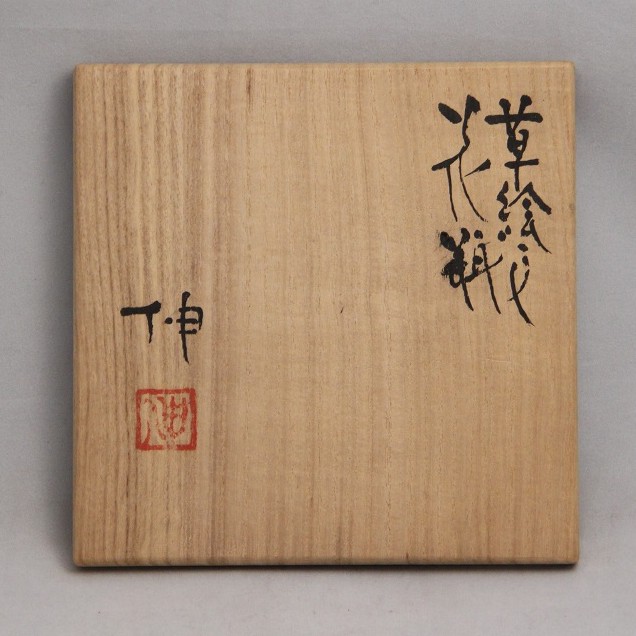
Original Wooden Box
D14cm H20.5cm
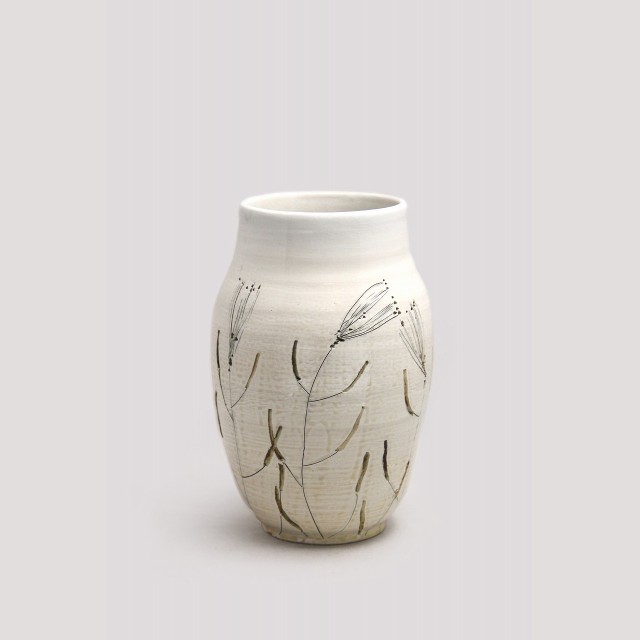
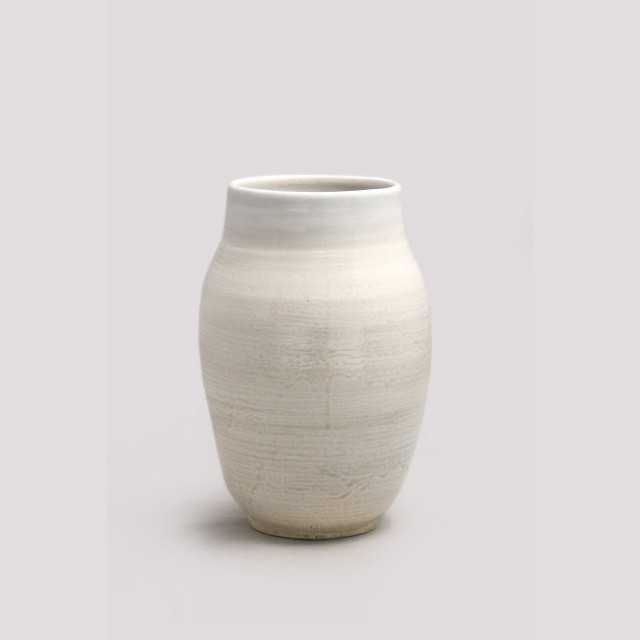
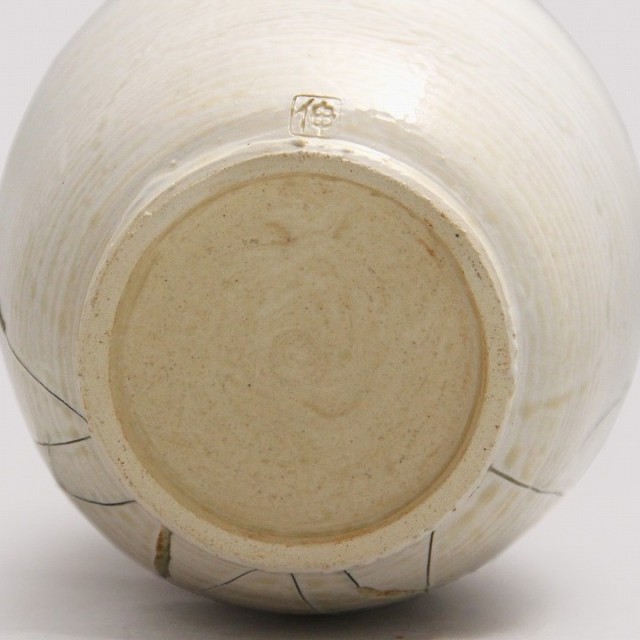
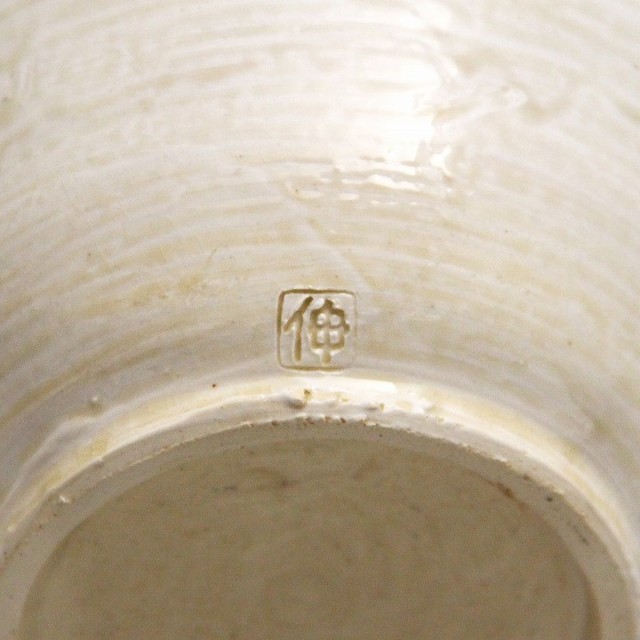
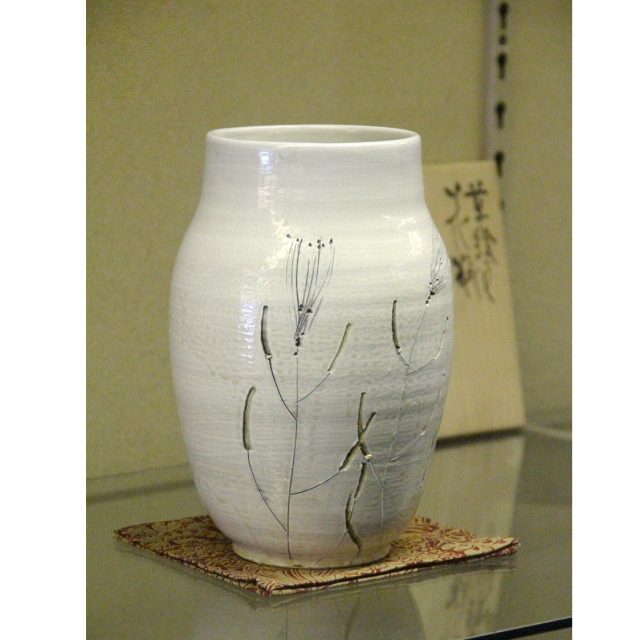
This is a beautiful ceramic flower vase ("Kabin") with a delicate grass motif, crafted by Shin Fujihira (1922–2012), a highly acclaimed Kyoto-based ceramic artist renowned for his deeply poetic and imaginative style.
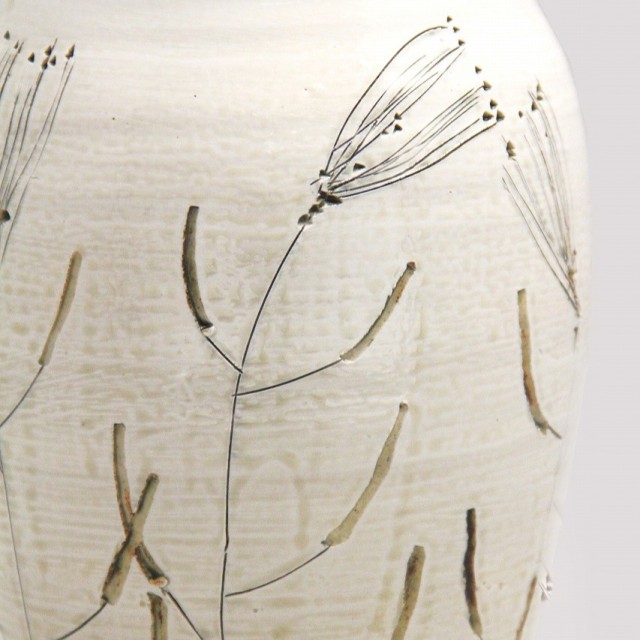
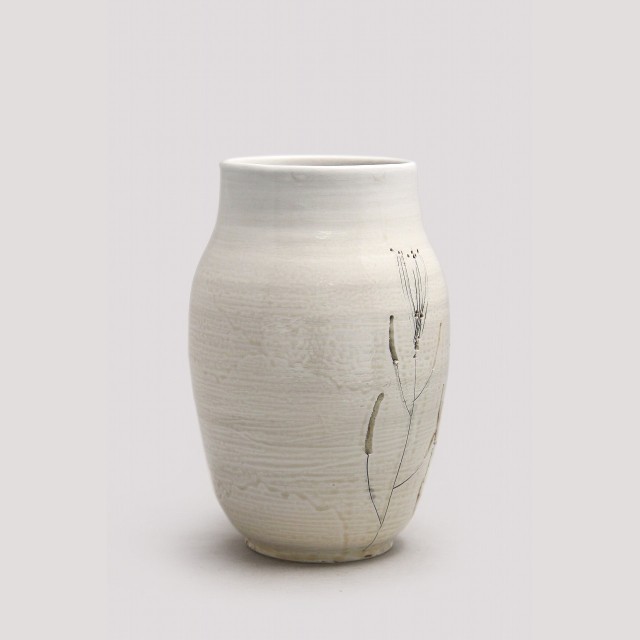
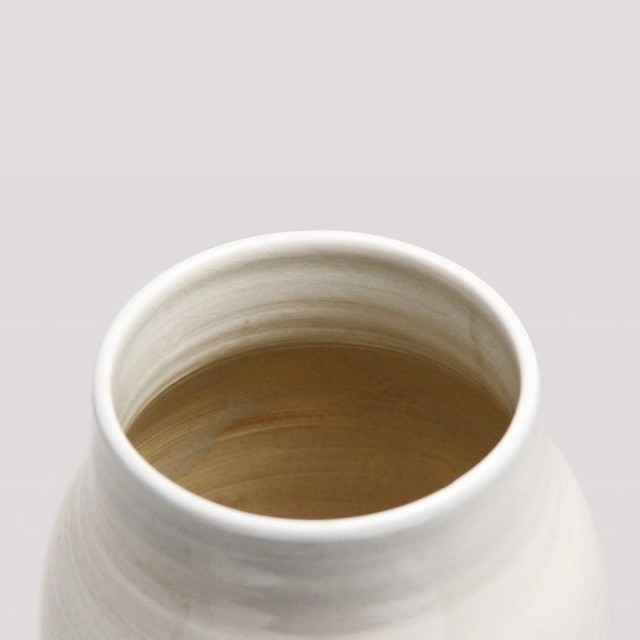
The vase features a gently rounded, organic form covered in a soft, matte white glaze. Its surface serves as a canvas for lyrical brushstrokes depicting wild grasses, evoking a nostalgic and serene atmosphere characteristic of Fujihira’s storybook-like worldview.
The subtle texture on the body beautifully complements the minimalist, linear drawing of the botanical design. This piece possesses a quiet yet captivating presence, bringing a touch of gentle elegance and the rustic beauty of Kyoto's avant-garde pottery tradition into any living space. It stands as a remarkable addition to any ceramic collection or a sophisticated accent for interior decor.
Shin FUJIHIRA
1922–2012
Born as the second son of the Fujihira Pottery Studio (now Fujihira Togei) in Gojozaka, the historic heart of ceramic production in Kyoto. His given name, "Shin" (meaning "to expand" or "stretch"), was bestowed upon him by the legendary master ceramicist Kanjiro Kawai, a close friend of his father, Masaichi, with the blessing that "the wisteria (fuji) of Fujihira may grow and spread far and wide."
In his thirties, he began his full-scale ceramic practice in a corner of the family workshop. In 1957, his work titled "Utagoe" (Singing Voice) won the Special Prize and the Hokuto Prize at the Nitten Exhibition, marking the start of his widespread acclaim, which later included the prestigious Japan Ceramics Society Award.
He was appointed as a professor at the Kyoto City University of Arts in 1973 and became a Professor Emeritus in 1988. Even after retiring from academia, he continued to expand his artistic horizons beyond ceramics into painting and calligraphy, deeply cultivating a lyrical and unique universe that earned him the moniker, "The Poet of Ceramics."
Contact about the Item