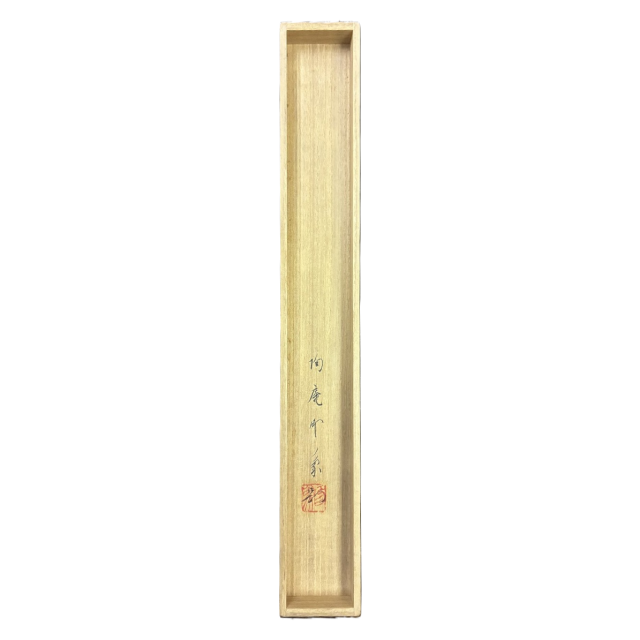
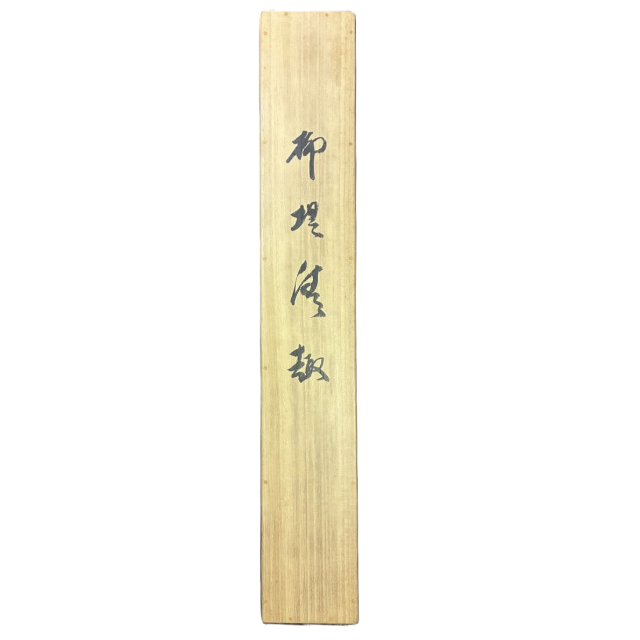
Original Wooden Box
W 42 × L 208 cm
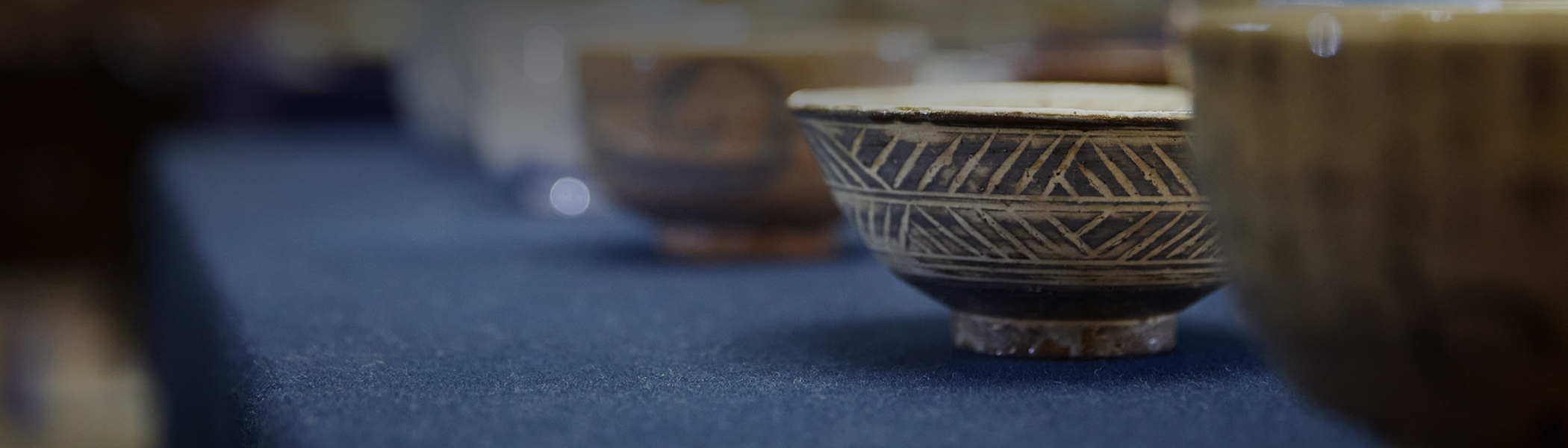
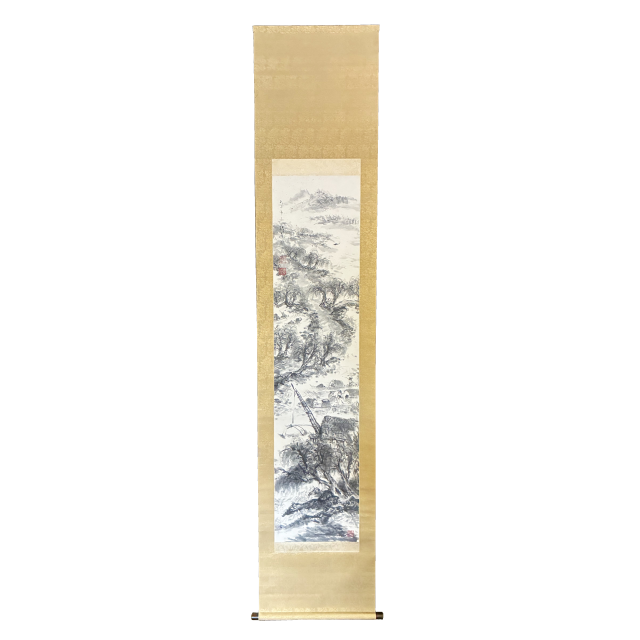
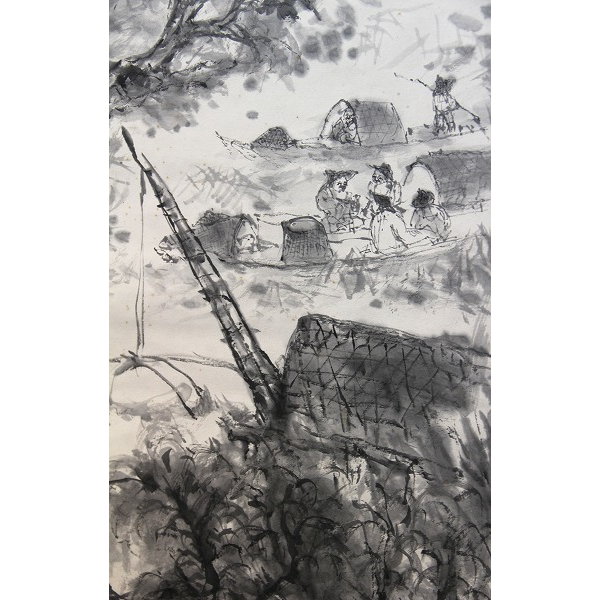
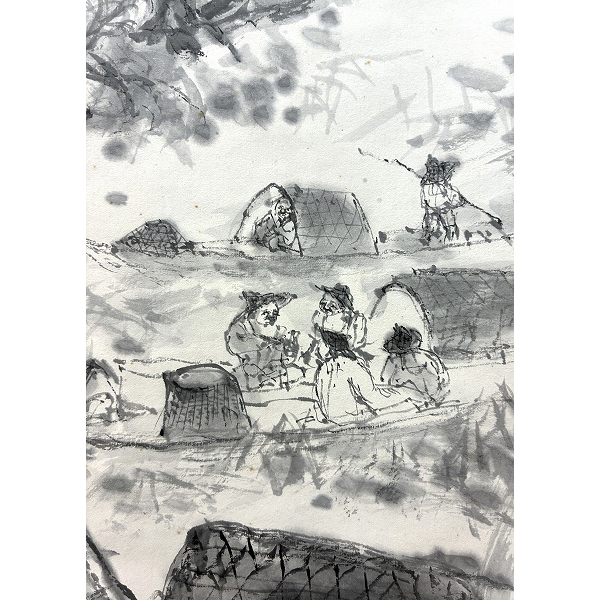
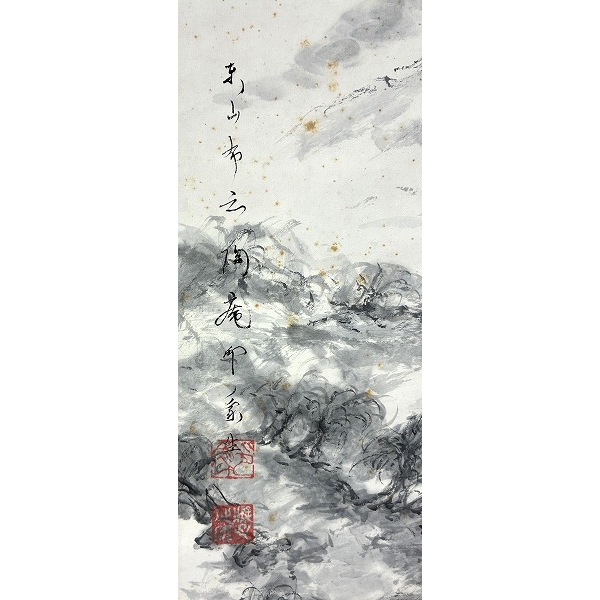
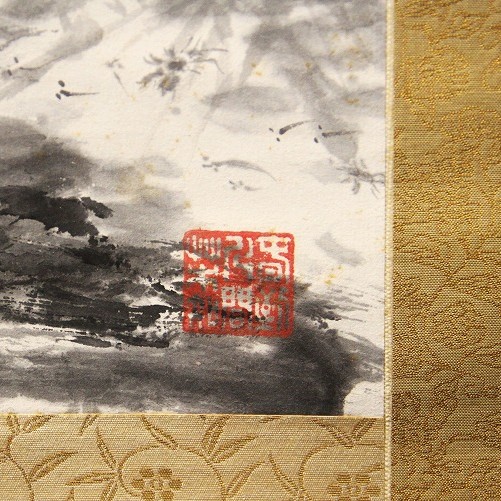
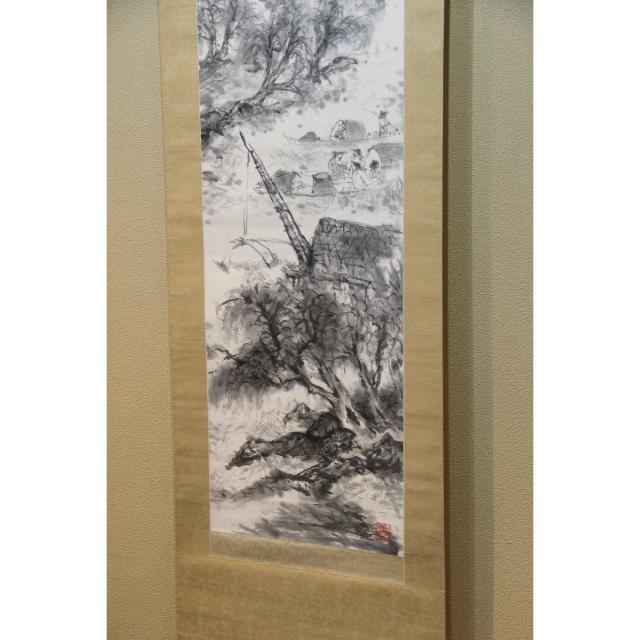
A charming landscape hanging scroll by Domoto Insho (1891–1975), one of modern Japan's most celebrated painters and a Cultural Merit recipient.
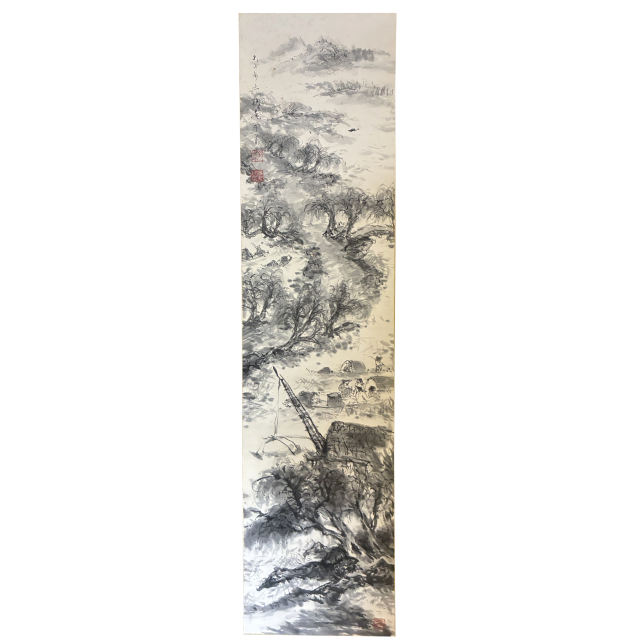
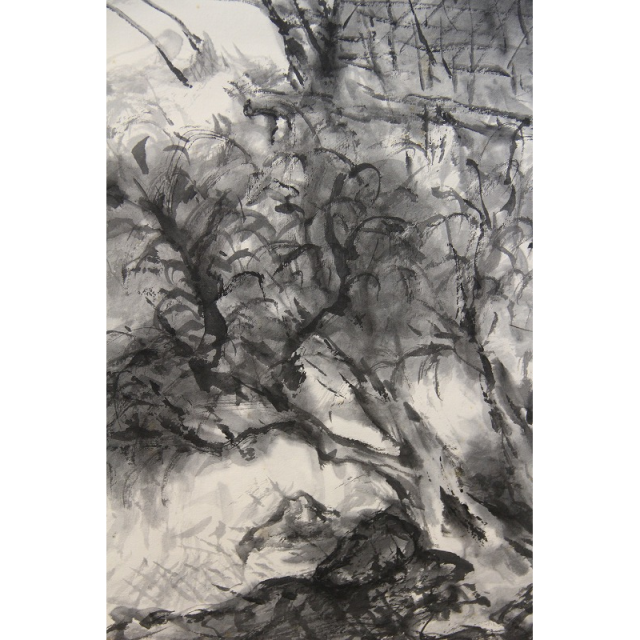
This ink-wash painting captures a serene scene along a willow-lined riverbank. Rendered with lively, expressive brushwork, it details figures resting on small boats, fishing nets, and thatched structures, evoking the quiet rhythms of traditional waterside life. Insho’s skillful modulation of ink tones creates a wonderful sense of breeze, space, and atmosphere.
Note: foxings/spottings is present at the paper.
Insho DOMOTO
1891–1975
Insho Domoto was born in Kyoto in 1891. His given name was Sannosuke.
After graduating from the Kyoto City School of Arts and Crafts, he initially worked as a craft designer, creating patterns for traditional Nishijin-ori textiles. However, his strong desire to become a Nihonga painter led him to enter the Kyoto Municipal Special School of Painting (Kyoto Shiritsu Kaiga Senmon Gakko) in 1918. He studied Nihonga there until 1921 and subsequently continued his studies in the school's research program.
He also studied under Suisho Nishiyama (1879–1958), a prominent pupil of Seiho Takeuchi.
In 1919, his work Fukakusa was accepted for the 1st Teiten exhibition, marking his successful debut as a young painter. At the 3rd Teiten exhibition in 1921, his work Chokiku-zu received a Special Selection (Tokusen).
In 1925, his large Buddhist-themed painting Kegon was exhibited at the 6th Teiten exhibition and received the Teikoku Bijutsuin Prize (Imperial Art Academy Prize). This early success helped establish his reputation as a specialist in large-scale religious paintings.
With this growing recognition, Insho began to receive commissions to create ceiling paintings and fusuma paintings for prominent Buddhist temples in the Kansai region. Over the course of his career, he completed more than 600 such commissions.
In 1934, he established his own private painting school, Tokyusha. He also became a professor at the Kyoto Municipal Special School of Painting in 1936, where he devoted himself to training the younger generation of artists.
In 1944, he was appointed an Imperial Household Artist (Teishitsu Gigeiin). In 1950, he became a member of the Japan Art Academy.
From around 1955, Insho began exploring abstract expression, making a bold departure from the conventions of traditional Nihonga. His experimentation with abstraction had a significant impact on the Japanese art world, and he was invited to participate in numerous international exhibitions.
In 1961, he was awarded the Order of Cultural Merit.
In 1966, he established the Domoto Museum of Fine Arts, which he designed himself, to exhibit his works.
Insho had a strong interest in history, aesthetic theory, and Western art. His broad knowledge and interest in Western art, from the Old Masters to modern movements such as Cubism, contributed to the successive transformations in his style and subject matter during the postwar years.
Insho Domoto died in September 1975 at the age of 83.
Contact about the Item