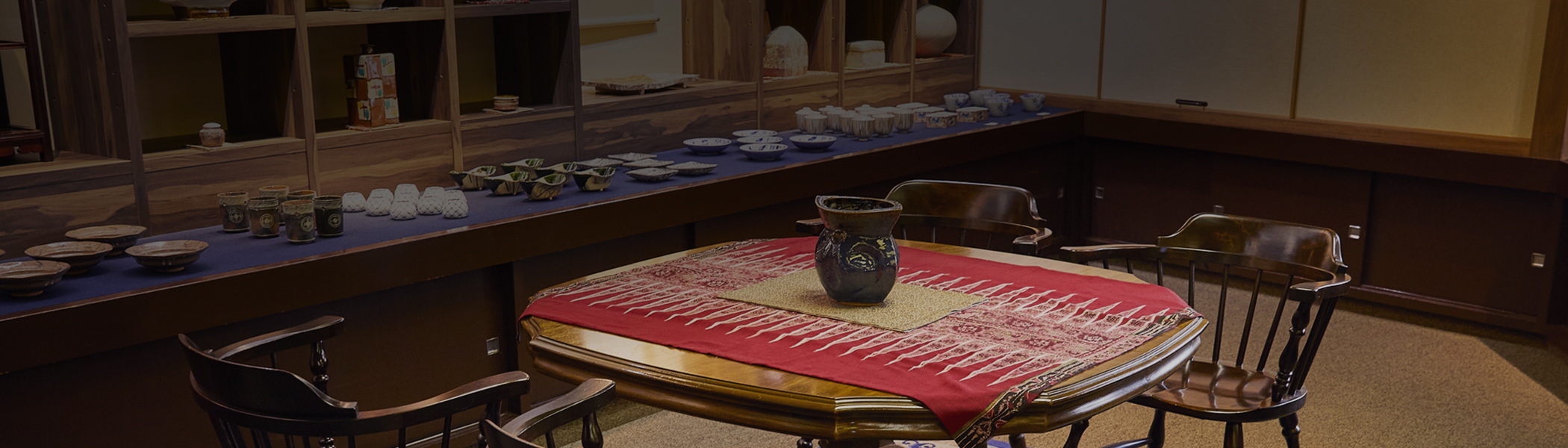
Also known as Mikawachi ware, Hirado ware is a type of porcelain produced in Sasebo City, Nagasaki Prefecture. During the Azuchi–Momoyama period, Matsura Shigenobu, the feudal lord of the Hirado domain, brought Korean potters back with him and established a kiln in Yamanaka Town, Hirado City. The production was later relocated to Mikawachi, where it continues to this day.
Mikawachi ware is internationally renowned for its fine white porcelain, which owes its quality to the use of Amakusa and Ajiro porcelain stones, discovered in 1712. The ware is characterized by its smooth, fine-grained surface, delicate and elegant blue-and-white underglaze painting, intricate openwork carving, and a jewel-like luster that suggests high-temperature firing. The "Karako-e" (Chinese children motif) is especially famous. In addition to white porcelain, pottery with brush-mark decoration, known as Kihara Hakeme, is also well known.